
8 Kids’ Storage Ideas That Just Hide the Mess Temporarily
Every parent knows the feeling of finally getting the playroom or bedroom to look somewhat under control, only to watch it explode back into chaos within minutes. The truth is that many popular kids’ storage ideas focus on hiding clutter rather than solving it. They promise quick tidiness but rarely support habits that keep a space functional. When bins become bottomless pits, cabinets turn into mystery zones and clever furniture doubles as a dumping ground, the mess doesn’t shrink. It just disappears for a moment, waiting to reappear the second kids start playing again. Understanding which ideas only mask clutter helps you build a room that actually works for real life, not just for a photo.
1. Stuffing Toys Into Oversized Bins Or Drawers
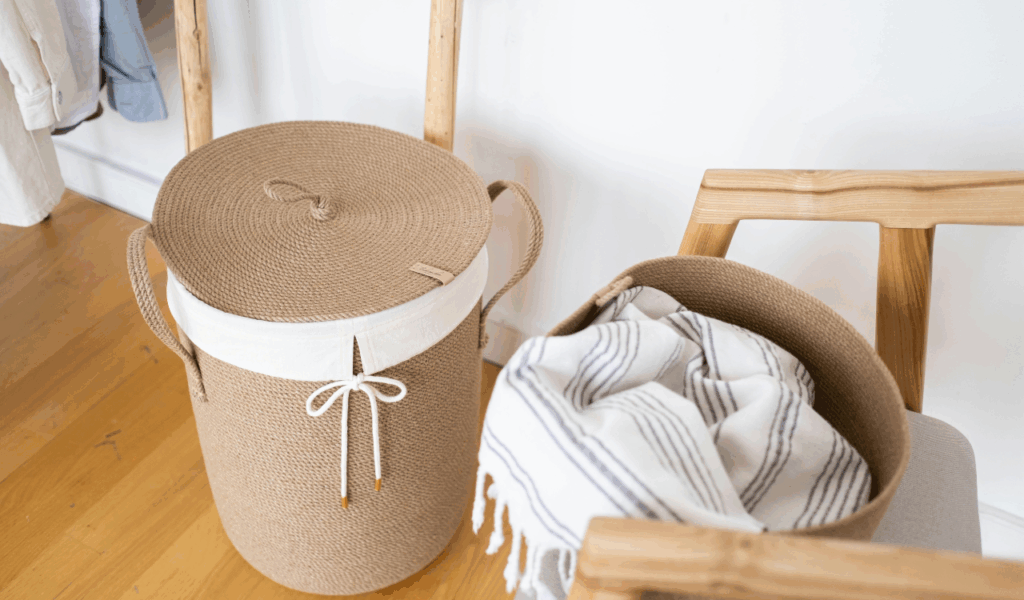
Big toy bins feel like magic at the end of a long day. You tip the mess in, close the lid, and the room looks instantly better. The problem is that nothing about this setup helps a child understand where things belong. Cars, dolls, blocks, and puzzle pieces all get dumped into the same void, so the next time they want something, they dig to the bottom and throw half the contents back on the floor. Small items break, puzzles lose pieces, and favorite toys get buried for months. Deep bins are also hard for younger kids to see into, which means adults end up doing the searching.
2. Using Hidden Storage Furniture And Calling It Organized

Storage ottomans, lift-top benches, and coffee tables with secret compartments are great for hiding clutter before guests arrive. For everyday family life, they are usually a short-term disguise rather than a solution. When a child is asked to clean up, the fastest move is to scoop everything into the nearest compartment without thinking about categories. Over time, those hidden spaces become jumbled catchalls of half-broken toys, lost game pieces, and random art supplies. Because you cannot see what is inside at a glance, it is easy to forget what you already own and accidentally duplicate things. Kids also tend to tip the entire contents out to find one item, which means you are back to square one on the floor.
3. Relying Only On Closed Cabinets And Built-Ins For Toy Storage
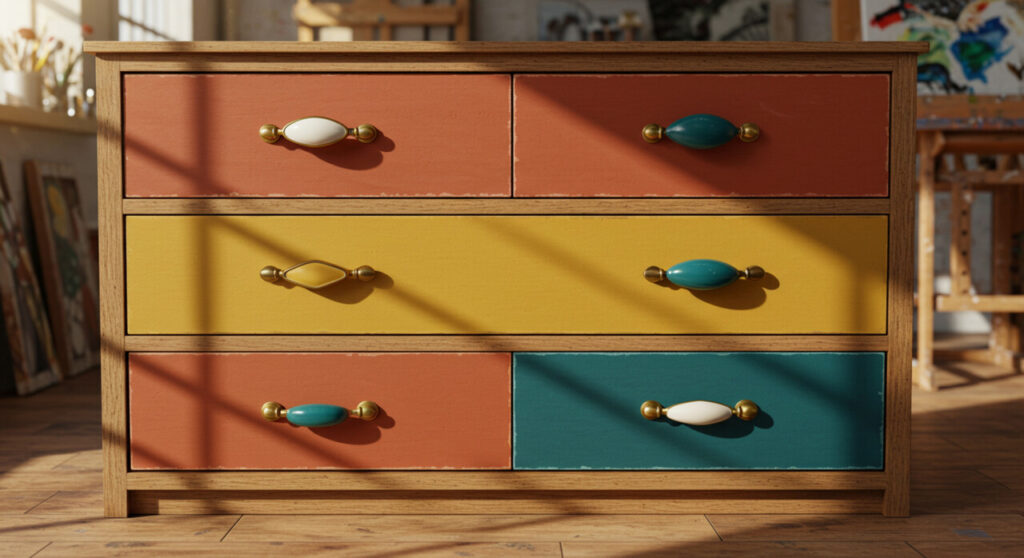
Tall cupboards and sleek built-ins are appealing because they make a room look calm when the doors are shut. For children, though, fully closed storage is often too abstract. If they cannot see their toys, they either forget about them or yank multiple doors open and leave them that way. Without clear visual cues, there is no natural prompt to put items back in specific spots. Everything from sports gear to building sets ends up piled behind a closed door, where it is hard to access and harder to maintain. Parents then have to supervise every step of the cleanup, because kids cannot tell what belongs on which shelf.
4. Using Low Shelves And Open Baskets That Are Easy To Dump
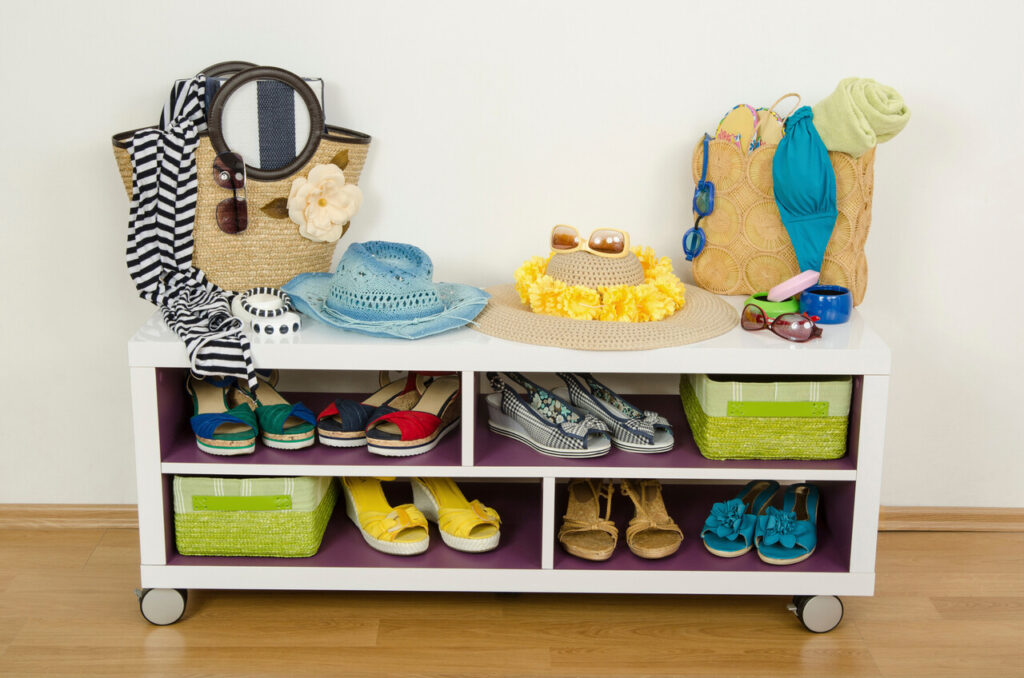
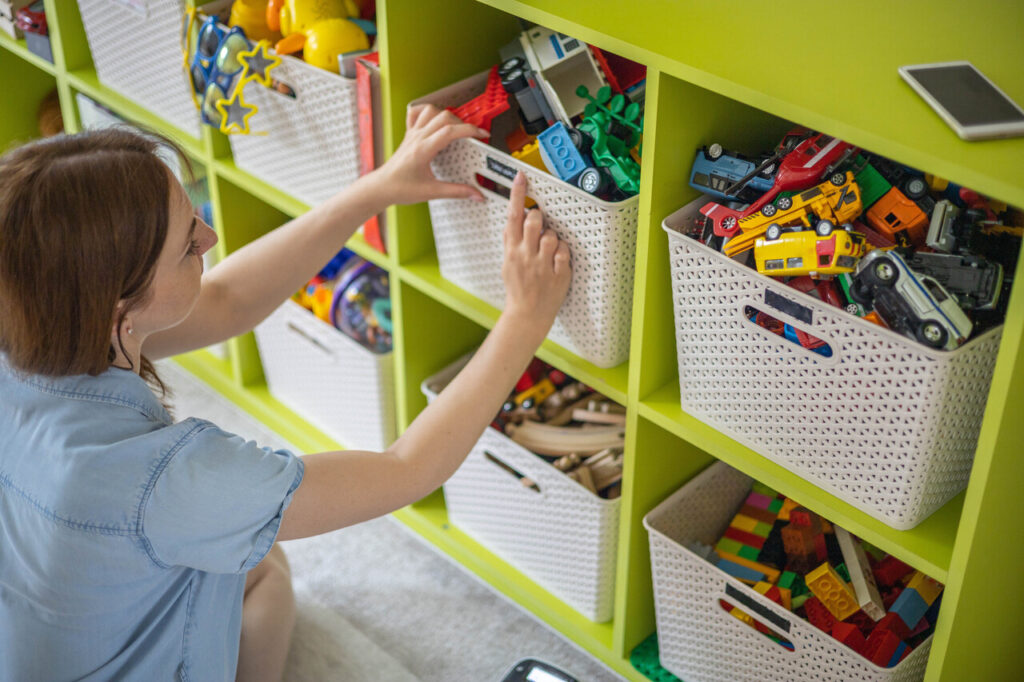
Low shelves with baskets are often marketed as kid-friendly storage, and they can be, but only when used with some structure. Without dividers or labels, a basket becomes another version of the big toy bin: anything goes in, everything comes out. Because the baskets are light and at floor height, children quickly learn they can tip them over in one motion to access toys, which spreads the contents across the room. Putting things away then feels like an overwhelming task, especially for younger kids, so they default to shoving items back randomly. Over time, sets mix, fragile pieces get crushed at the bottom and the baskets themselves start to sag under the weight.
5. Using Toy Rotation Boxes Without Reducing The Total Amount Of Stuff
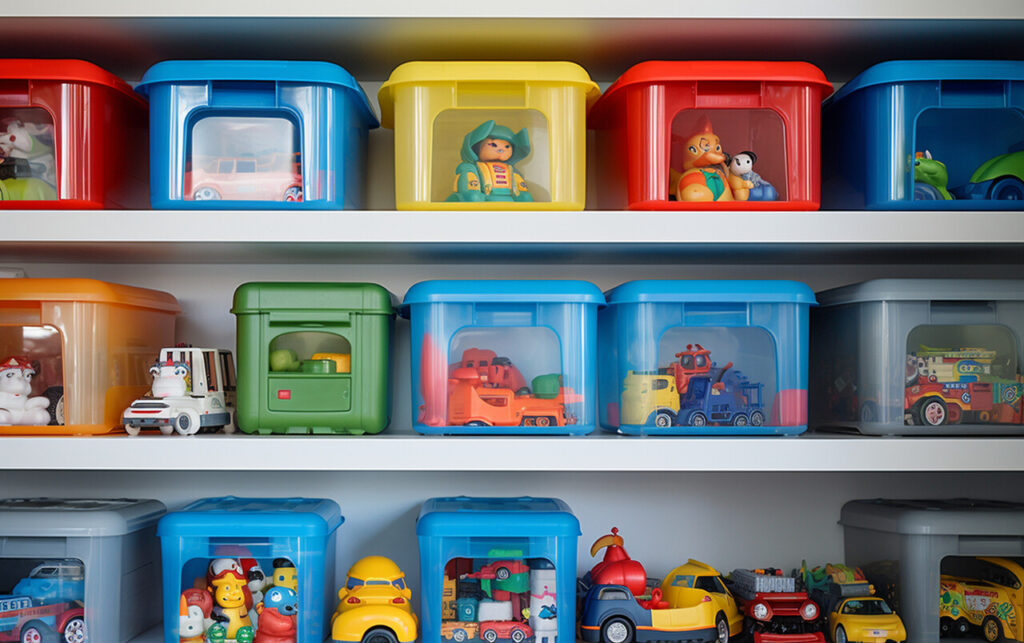
Toy rotation is a useful idea when it is combined with regular decluttering, but many households adopt only the first part. Toys are packed into bins, moved to closets or under beds, and swapped out every few weeks, yet very little actually leaves the house. That means the total volume of toys stays the same or even grows, just spread across more containers. Over time, those stored boxes take up closet space, gather dust and become heavy to move. Parents still have to manage all of it, just in phases rather than all at once. Instead of simplifying, this approach can postpone decisions, turning visible clutter into hidden backlog that eventually needs one big, draining sort.
6. Leaning On Pretty Baskets And Matching Bins Instead Of Editing Toys
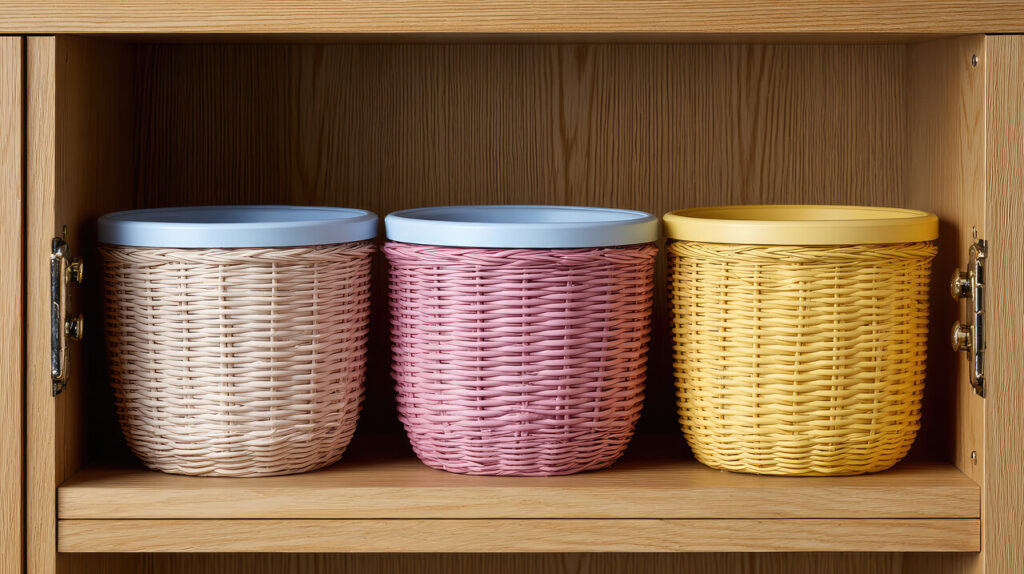
Coordinated storage looks satisfying. Matching baskets, neutral bins, and labeled boxes give a sense of order at a glance. The reality is that containers only help if they are holding things you actively choose to keep. When every toy, including broken items and outgrown sets, gets a designated basket, you are organizing volume rather than reducing it. Clean-up time may feel smoother for a while, but the underlying problem remains: there is simply too much for children to manage easily. As new items arrive for birthdays and holidays, the system stretches and then breaks, because the shelves fill to capacity and nothing can be added without a complete rearrangement.
7. Relying Only On Floor Bins That Crowd The Room
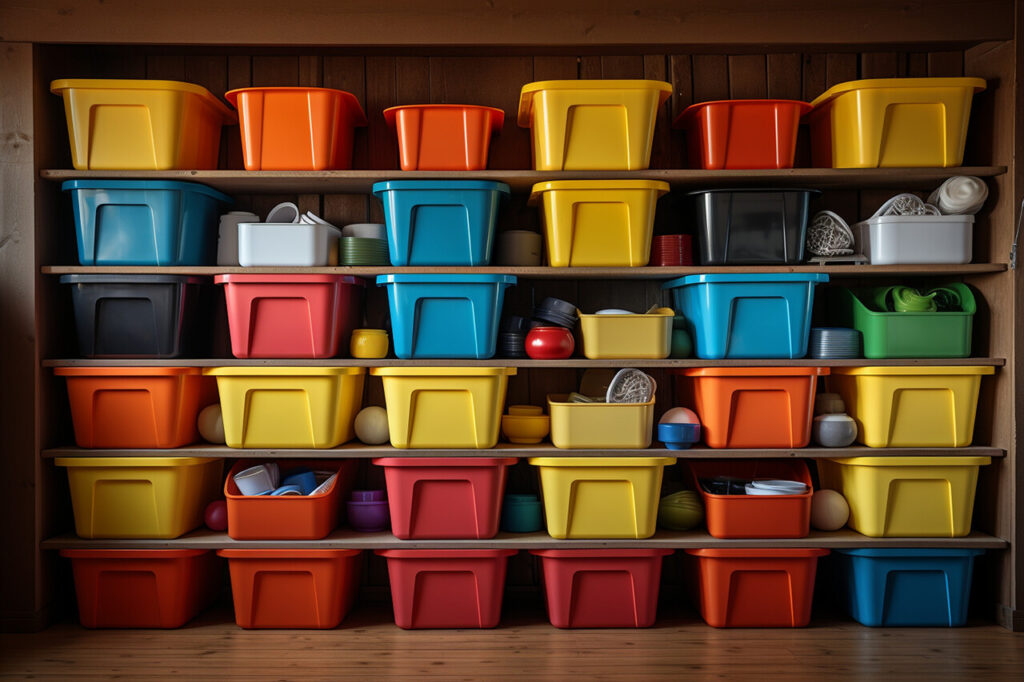
Large tubs and crates parked along the floor seem convenient because children can reach them easily. The trade off is that they use the very space you are trying to free up for play. When several floor bins line a wall, they quickly creep into walkways, making it hard to move furniture or vacuum. During play, lids are left open or removed, so the footprint of each storage piece expands further. In small rooms, this can make the entire area feel like one big pile in different containers. Children often climb on or in the bins, which can damage them or create safety issues. Since the storage is not lifting anything up and off the floor, it does little to change the feel of the room between play sessions. The mess is simply corralled into plastic islands instead of truly cleared.
8. Treating Storage As A One-Time Fix Instead Of Building Daily Habits
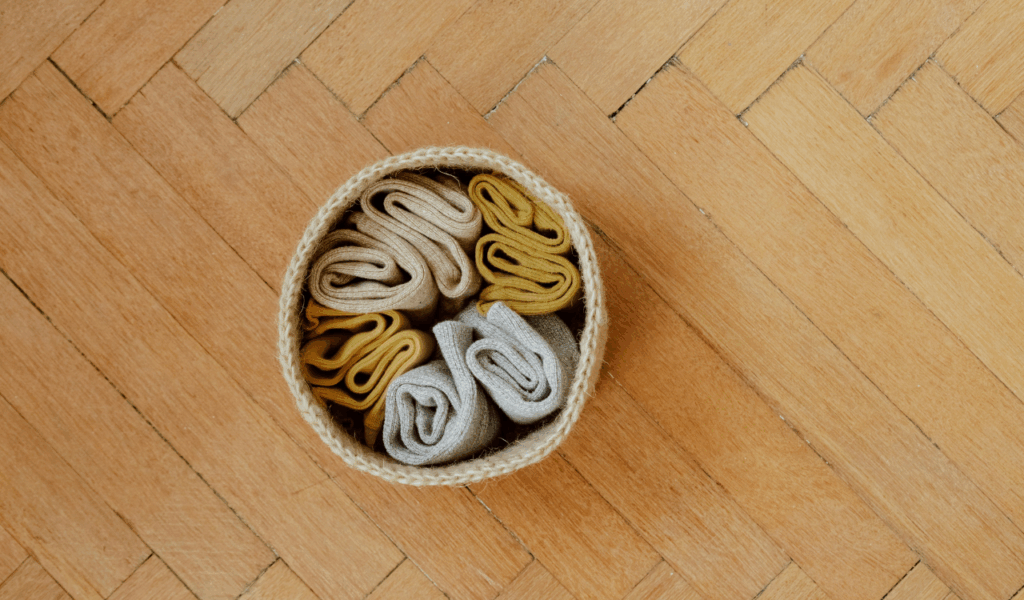
Many kids’ rooms get a big organizing push once or twice a year. New shelves go up, labels appear, and bins are rearranged, and for a moment, everything looks under control. If this effort is not paired with simple, repeatable routines, though, the order fades quickly. Children need clear, consistent expectations about where things go and time in the schedule to put them back, with some adult support. Without that, even the best-designed systems slowly revert to clutter. Parents are tempted to handle cleanup alone, which reinforces the idea that tidying is an occasional event rather than a shared daily habit. The storage pieces may be cleverly chosen, but they cannot do the work by themselves.