8 Gold Frames That Chip and Make Art Look Bad

A gold frame is always appealing since it can turn a plain poster into a work of art that belongs in a gallery. But expert art restorers and custom framers say that the “gilt” frames you see in most big-box retailers are typically “garish” copies that use cheap coatings instead of real metal leaf. Real gilding employs layers of gesso and very thin sheets of gold that get a delicate, royal patina as they get older. On the other hand, mass-produced versions contain synthetic “liquid gold” or copper-based powders that react with air and eventually turn a sickly greenish-black or chip away to show the plastic or sawdust core behind.
Interior designers say that a bad frame doesn’t just break; it also “cheapens” the art it contains. High-gloss, brassy coatings make a “hot spot” that pulls attention away from the art and toward the frame’s defects. Estate sale professionals say that these cheap frames are generally the first things to show signs of “wear and tear,” with the “gold” finish coming off with the slightest touch. To keep your work the primary focus, we’ve found eight types of “gilt” frames that experts say will eventually chip, tarnish, and spoil your look.
1. Bronze-Powder “Liquid” Gilt
Many cheap frames don’t even go through the leafing process. Instead, they use a clear lacquer mixed with a spray-on bronze powder. This finish appears great on the shelf, but builders say it’s the most unstable finish on the market. Bronze is a mixture of copper and tin, both of which are quite reactive. The “gold” will start to rust within a year, turning a drab, muddy brown or possibly getting green blotches. This chemical change is permanent and can look terrible with the warm colors in your art.
Experts say that these liquid gilding finishes are also quite fragile. The paint doesn’t “bond” to the wood or plastic like regular gesso does, so it can “shatter” or chip if the frame is shaken. Designers say that you shouldn’t buy a frame that looks “uniform” and shiny when you look at it with a magnifying glass. If the gold seems like it was sprayed on instead of put in sheets, it is a low-quality liquid finish that will make the edge of your work look dirty over time.
2. Unsealed “Dutch Metal” Sheets

Dutch Metal, often called composition leaf, is a blend of copper and zinc that looks like real gold but costs a lot less. Curators, on the other hand, say that Dutch Metal is a ticking time bomb without a professional-grade sealer. These composition leaves will tarnish as soon as they come into contact with moisture in the air, unlike 24-karat gold, which is chemically stable. Professional organizers commonly see these frames have “fingerprint tarnishing,” which is when the oils from a person’s fingers make the metal turn black for good.
Some people in the art industry say that manufacturers often skip the sealer to save money, which leaves the raw metal exposed. Experts believe that if the frame feels “cold” but looks “brassy,” it is probably unopened composite leaf. Designers suggest selecting for a “matte” protective finish to keep your investment safe. Without it, the bright yellow will quickly turn into a dull, mottled gray that makes even the best painting look like a poor copy.
3. Plastic-Wrapped Polystyrene Mouldings
The cheapest frames are made of polystyrene and are coated in a thin, gold-colored plastic film. These aren’t really “gilt” at all, according to experienced flippers. They’re more like “shrink-wrapped” decor. The main problem with these frames is “delamination,” which is when the plastic film starts to bubble and tear off the foam core. When the film starts to lift at the mitered corners, it can’t be fixed, and the unattractive white or gray plastic core is left open for everyone to see.
Designers say to stay away from these since the plastic film frequently has a “static” quality that attracts dust, which then gets stuck under the corners of the film. Landscapers of the inside say that these frameworks are also very light, which makes them easy to break and tumble. Experts claim that if you can “dent” the frame with your fingernail, it is constructed of foam that is not very dense. You can only wear these frames for a short time because the “gold” coating will start to peel off in long, ugly stripes during the first dry winter.
4. Acidic MDF “Gold” Ornate Frames

A lot of “ornate” gold frames are composed of Medium Density Fiberboard (MDF) that is covered in a thick layer of epoxy that has been painted gold. Contractors say that the chemicals in MDF can “off-gas” and damage the gold finish from the inside out, even if they look substantial and expensive. This causes “pitting,” which are tiny, black holes that show up on the gilded surface. Professional restorers say that the acidic nature of the wood pulp can also cause the gesso layer to break, which can make big “chunks” of the ornamental pattern come off.
Organizers say that these frames are really bad for works on paper. The acids can move through the frame and stain the art, which can cause “mat burn” or yellowing. If the rear of the frame appears like pressed cardboard, experts say it is a high-risk MDF product. Designers say that strong wood frames with a “clay bole” base are the best choice for a long-lasting look because they give the gold finish a firm, non-reactive base that keeps it looking bright and “garish-free” for decades.
5. High-Gloss “Vacuum-Plated” Finishes
A method called vacuum plating puts a very thin layer of metal on a plastic surface, giving it a shiny “chrome gold” look. Designers say that this appears futuristic and sleek, but it is the definition of “garish.” The finish is so shiny that it makes a lot of glare, which makes it hard to see the painting. Professional flippers say that vacuum plating is also very thin, often only a few atoms thick. This means that you can “wipe it off” with regular glass cleaner.
Landscapers of the gallery wall say that when the plating is scraped, the plastic underneath is easy to see right away. You can’t “buff out” a scratch on vacuum-plated frames. Experts suggest these are better for kids’ rooms or temporary event signs than for fine art. People often add fake “jewelry gold” to the “yellow” color to make it look more like “jewelry gold.” This can make the whole exhibit look cheap and over-commercialized by overpowering the soft colors in a watercolor or a delicate sketch.
6. Low-Fire Gesso “Composition” Casts
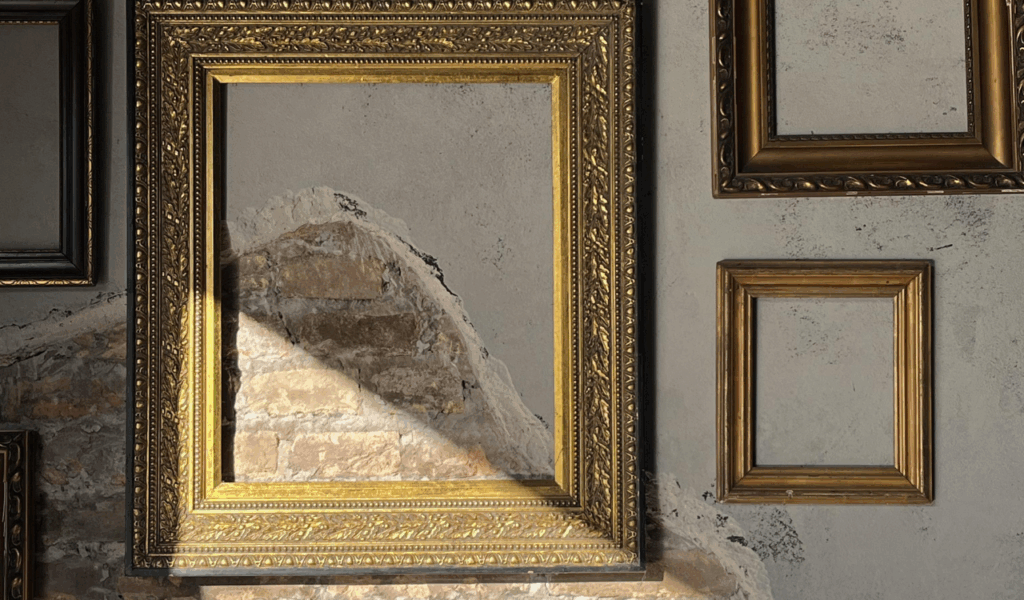
Compo, which is a blend of glue, resin, and linseed oil, is used to make the details on traditional ornate frames. Budget versions, on the other hand, employ a low-fire gesso that is basically dried chalk. Professional restorers say that this material is quite sensitive to variations in humidity. The gesso shrinks and “pops” off the wooden frame when the air gets too dry. This takes the gold finish with it. Experts say this makes the surface look like a “patchwork” of white plaster dots that break up the gold.
Designers say you should assess the “weight” of the frame’s fancy parts. This cheap gesso probably made the scrolls and leaves feel “hollow” or “sandy.” Landscapers say that big-box stores typically sell these frames as “vintage-inspired.” These fake vintage frames, on the other hand, may start to fall apart after a few years if they are hung over a radiator or in a humid hallway. This will convert your “antique” look into a maintenance nightmare.
7. Foil-Stamped “Ribbon” Frames

When you foil stamp, you heat-press a metal foil onto a wooden mold. Experts say that this is a quick and cheap way to get a “gilt” look, but the foil doesn’t have the depth or “glow” of actual leaf. The foil is made of plastic and is flat, so it can “crinkle” over time as the wood underneath expands and compresses. This makes the texture look more like holiday wrapping paper than a professional frame, which is “cheap.” Professional flippers commonly see these “veins” of wrinkled foil on the long sides of bigger frames.
Organizers say that frames with foil stamping also get “edge-wear.” The corners where the foil is cut are sometimes sharp and can become stuck on cleaning cloths, which pulls the foil away from the wood. Experts believe that if you look at the edge and notice a “seam” of gold, it is a foil that has been imprinted. Gilding that is real wraps around the edges without any seams. People say these frames look “garish” because the foil reflects light in a flat, harsh way that doesn’t have the warm, “living” character of real gold leaf.
8. “Wax-Gilt” Rub-on Restorations
Some companies utilize a “wax-based” gold rub, such Rub ‘n Buff, to finish their frames or fix damage on the assembly line. This is a terrific tool for craftsmen who like to do things themselves, but experts say it is not a lasting professional finish. The wax never really “hardens” and stays “tacky” for a long time. This implies that it can pick up dirt and dust that will stay in the gold finish forever. Professional chefs in the framing field say that the wax can even “melt” or spread if the frame is near a light bulb or a sunny window.
Designers say you should stay away from frames that feel “waxy” or leave a gold mark on your fingertips. This kind of finish doesn’t have the “burnish” of real gold, therefore it will eventually look dull and “dirty” instead of bright and exquisite. Landscapers of the art collection say that once a wax finish is on, it’s almost impossible to put a real leaf on top of it without taking everything off. If you want a frame that keeps its shine, stick with “water-gilded” or “oil-gilded” alternatives that use a firm, crystalline gold surface.