7 Open Shelving Ideas That Turn Kitchens Into Dust Zones

The use of open shelves in kitchen design is a popular choice since it is not only roomy but also contemporary and visible. There are various open shelf methods that, according to the majority of homeowners, demand more attention than they are convenient. Surfaces are quickly contaminated by grease, dampness, and airborne particles that come from kitchens. The accumulation of dust and filth is accelerated on shelves that are either improperly arranged or not adequately stocked with decorations. A design that is appealing to the eye may be difficult to clean and maintain. Why seven open shelf concepts make kitchens dusty and demand more maintenance than most people expect is explained in this article.
1. Fully Open Shelves Above the Stove
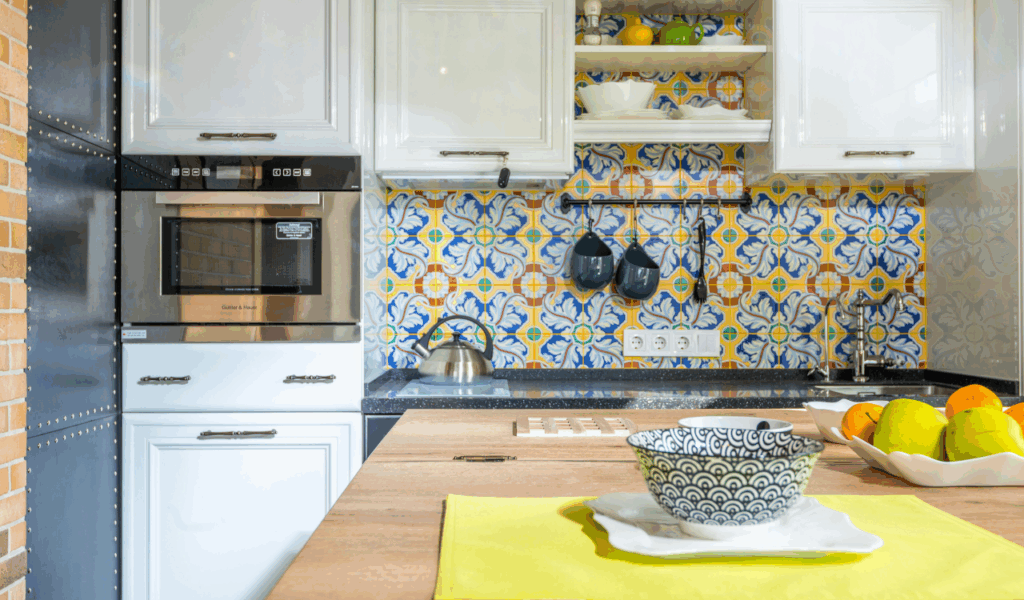
Putting fully open shelves right over the stove is one of the fastest ways to make a dust and grease problem that won’t go away. When you cook food, tiny particles of oil, steam, and food residue are discharged into the air. These particles quickly ascend and land on open shelves, where they attach to the surface and gather dust. Even wiping it down often might not stop accumulation over time. Items here need to be washed before use, and decorations quickly lose shape. Unless you have sufficient airflow and clean them daily, shelves above the stove are more trouble than they’re worth.
2. Decorative Shelves Packed With Small Items
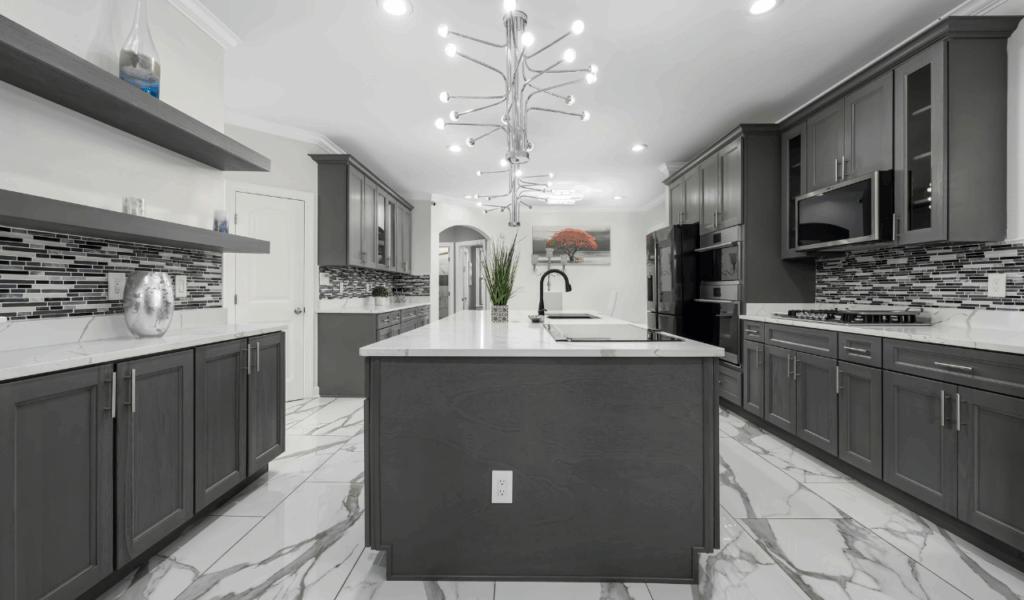
Open shelves filled with numerous small decorative objects may appear curated and stylish, but they create countless surfaces where dust can settle. Each figurine, frame, or accent piece adds edges, grooves, and textures that trap airborne particles. Cleaning becomes time-consuming because every item must be removed and wiped individually. When cleanings are skipped, dust buildup becomes immediately visible. In kitchens, these objects also collect grease residue, which dulls finishes and alters colors. Decorated shelves become messy and require more maintenance than most homeowners imagine.
3. High Shelves Near the Ceiling
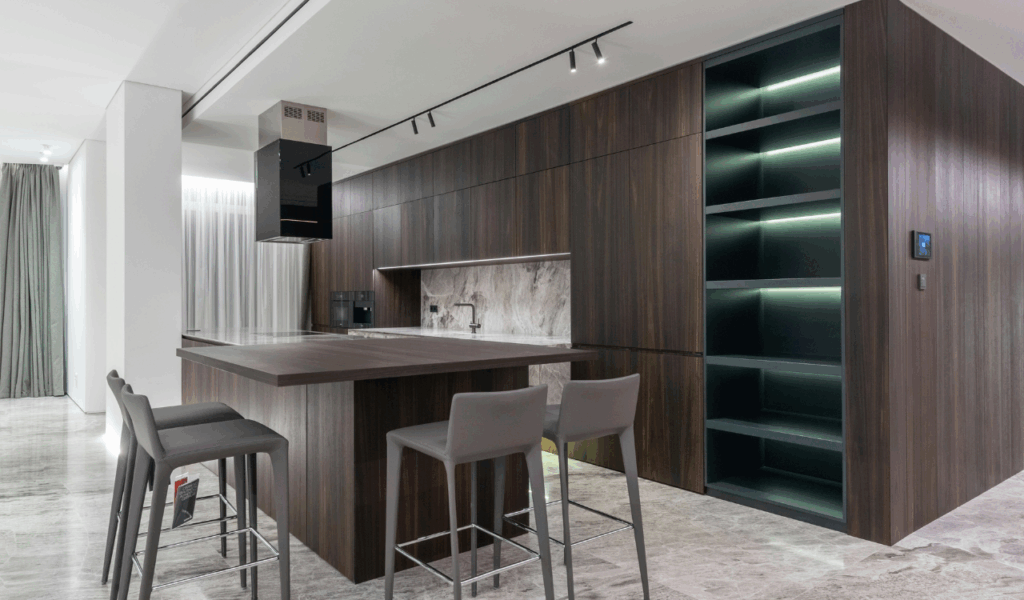
The installation of shelves in close proximity to the ceiling may appear to be an ingenious method of making the most of vertical space; yet, they typically end up being dust catchers that are ignored. Because of the natural tendency of warm air to ascend, grease and dust are carried higher, where they eventually collect on these raised surfaces. Because shelves are hard to reach, they are cleaned less often, resulting in thick residue that is unseen. Items stored at such high levels are rarely used, prolonging dust collection. Simple storage solutions often result in dirty shelves that require stools or ladders to clean.
4. Open Shelving Near Entryways or Windows
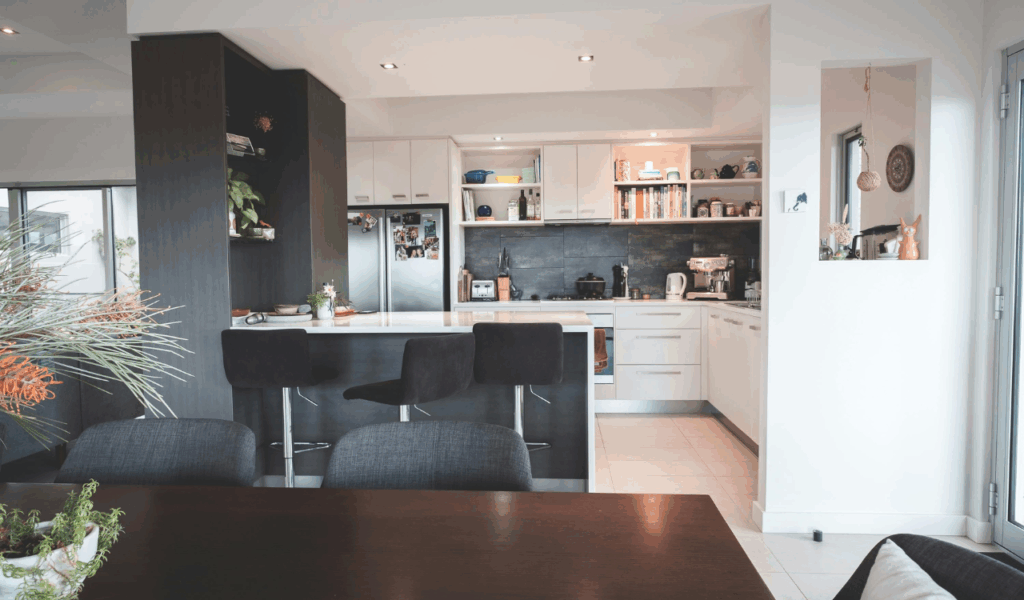
When open shelves are located near kitchen entryways or large windows, they are subjected to increased airflow, which draws dust, pollen, and debris from the outside elements into the kitchen. Whenever a door is opened or a window is cracked, airborne particles are able to circulate throughout the area and will eventually settle on shelving that is exposed. Dust may become more evident when exposed to sunlight, which may highlight buildup even earlier. These shelves must be cleaned regularly to maintain their shine. Even if the rest of the kitchen is tidy, neglected ones make it look messy.
5. Shelves Used for Rarely Used Items

A typical mistake that undermines the objective of open storage is the usage of open shelves to store objects that are only used infrequently instead of open shelf. Dust and grease have plenty of opportunity to settle around when serving dishes, specialty cookware, or seasonal goods are left unused for an extended period of time. In contrast to closed cabinets, open shelves do not provide any protection from particles that are in the air. How long products are unused determines rubbish buildup. Open shelves are designed to make life easier, but they often need to be washed before use.
6. Mixed Storage of Food and Décor
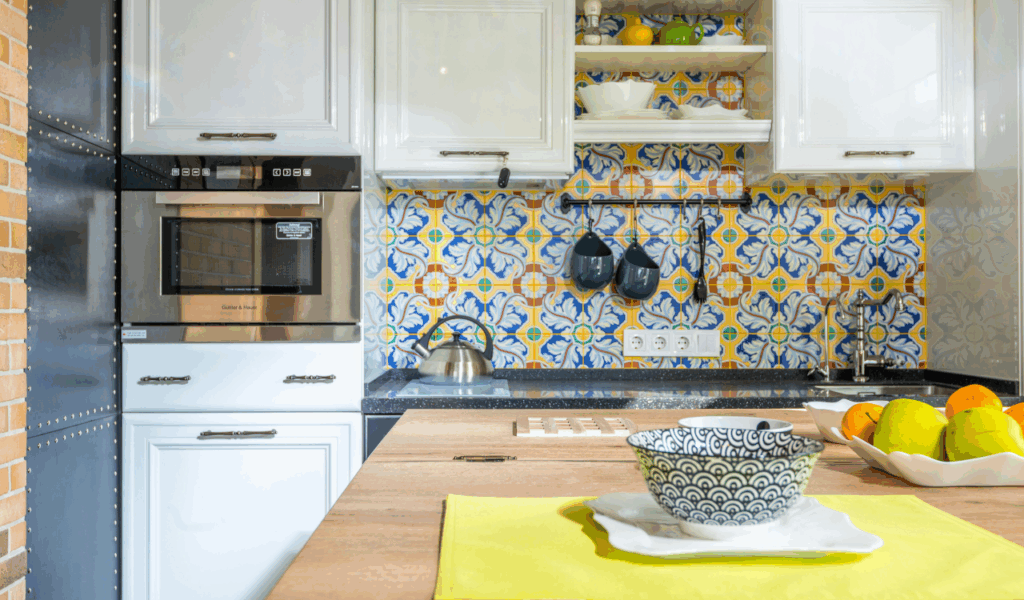
It is a source of increased dust and hygiene issues when food products and ornamental objects are stored together on open shelves. The airborne particles that are present in open containers, bowls, and jars are exposed to them, while the décor that is close gathers grease and filth. It is more difficult to clean a place that contains both food and decorations because crumbs and residue can attract insects, and cleaning becomes more complicated. Although this layout looks good in staged kitchens, it’s often unworkable in real life. Active households often struggle to organize and maintain mixed shelving configurations safely.
7. Narrow Shelves With No Lip or Guard
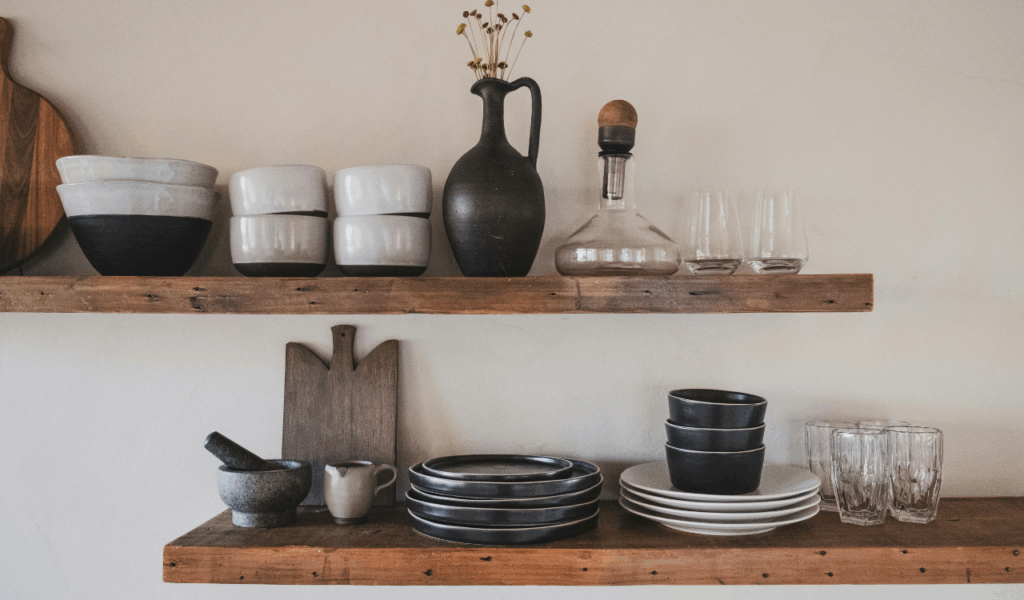
The appearance of narrow open shelves that do not have a raised edge or protective lip may be considered minimalist and sleek; nonetheless, these shelves allow dust to settle freely and offer very little stability. Due to the absence of a guard, it is necessary to properly arrange the goods and maintain a light weight in order to prevent falls. Frequent washing is needed because grease and grime collect on exposed surfaces. Items often need to be repositioned to be secure, which increases handling and cleaning. These shelves are less useful over time since they require more maintenance than deeper or partially enclosed storage.