8 Floating Shelves That Sag or Pull Out of the Wall
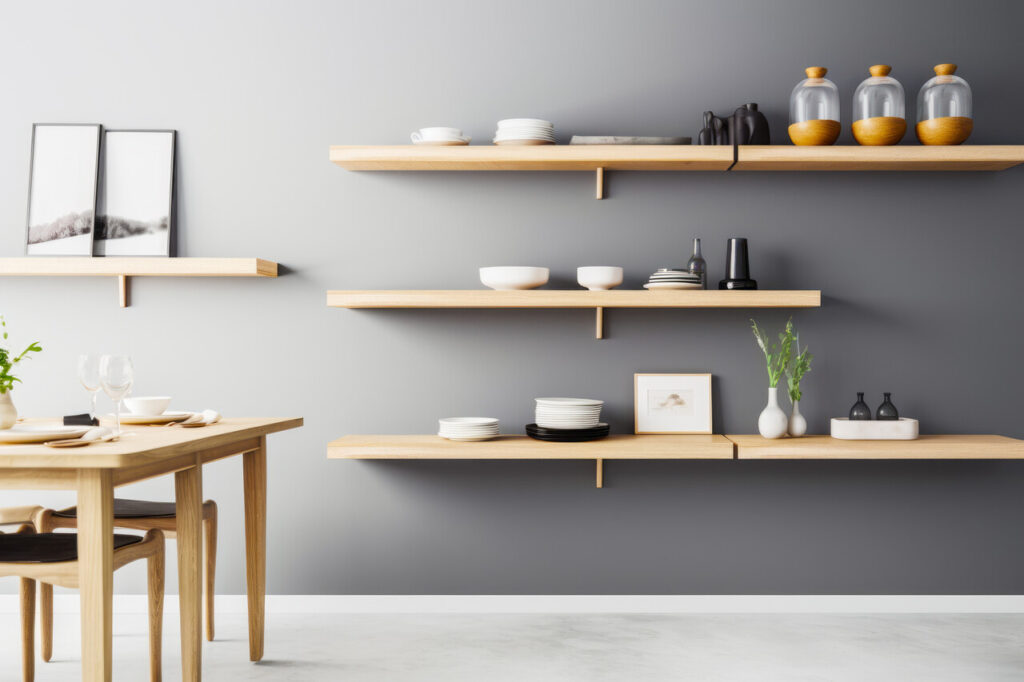
Floating shelves promise clean lines, open space, and a modern look that feels effortless. In reality, many of them struggle the moment real life moves in. Weight distribution, wall structure, material quality, and installation shortcuts all play a role in whether a shelf stays level or slowly gives up. What looks sturdy on day one can begin to sag, tilt, or pull free after weeks of use. These failures are rarely dramatic at first. They creep in through small gaps, subtle angles, and shelves that no longer feel trustworthy. Not all floating shelves are bad, but some are practically engineered to disappoint once they leave the showroom.
1. Lightweight MDF or Particleboard Floating Shelves
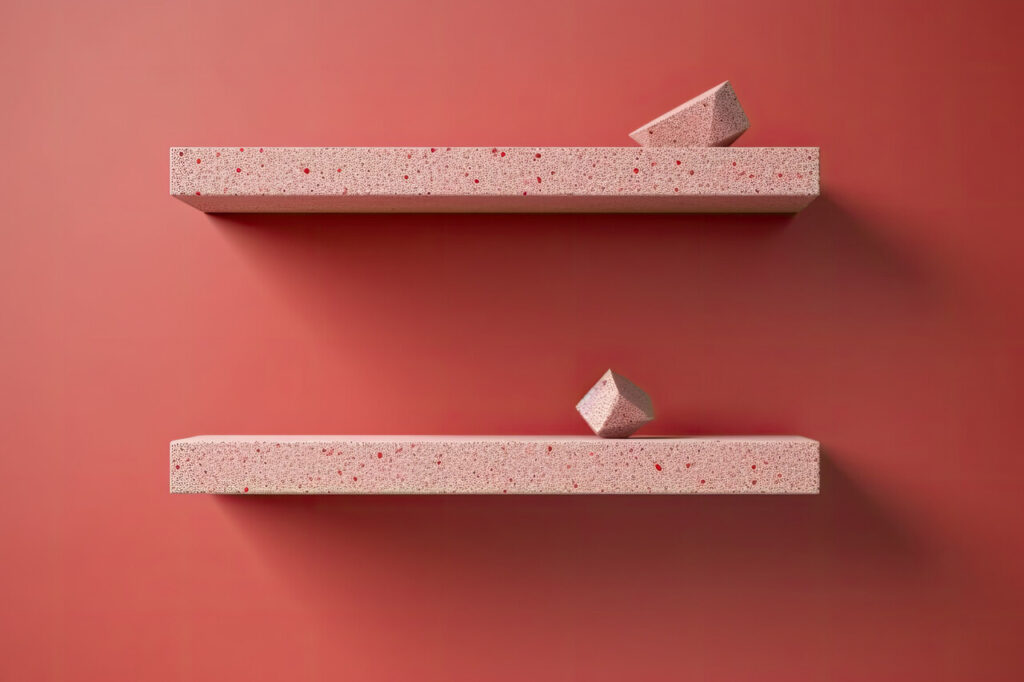
At first glance, MDF and particleboard floating shelves look like an easy win. They are affordable, smooth, and often finished in trendy colors that photograph well online. The problem shows up after real use begins. These engineered woods lack the internal strength of solid lumber, so even moderate weight can cause gradual bending. Books, dishes, or decorative objects concentrate pressure in the middle, where MDF is weakest. Humidity makes things worse, causing subtle swelling that speeds up warping. Once sagging starts, it rarely reverses. Over time, the shelf may pull away from the wall as the bracket struggles to compensate for the board’s loss of rigidity.
2. Floating Shelves With Short Prong Brackets
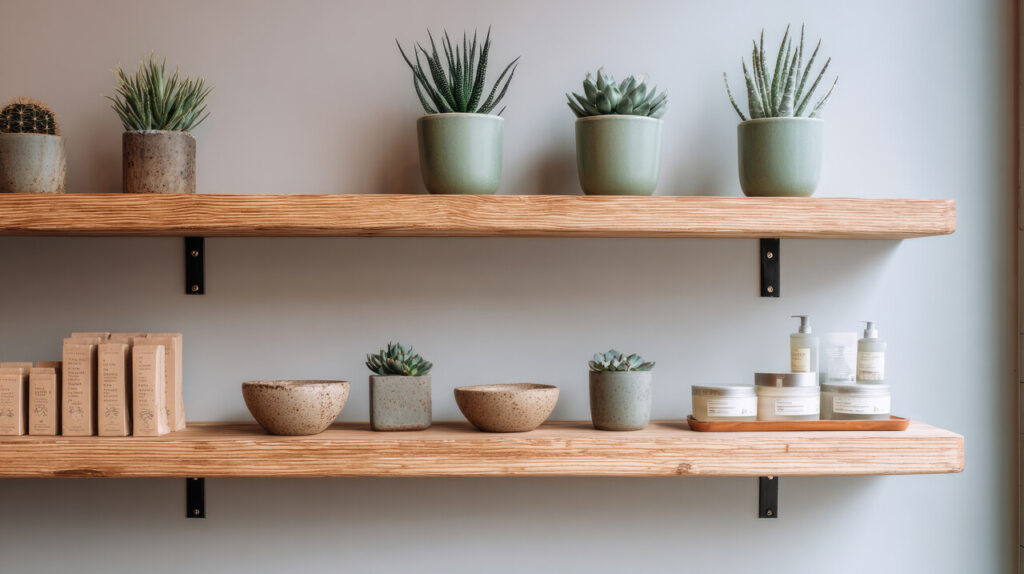
Shelves that rely on short metal prongs hidden inside the board often promise a sleek, hardware-free look. The issue is leverage. Short rods simply do not penetrate deeply enough into the shelf or the wall to support sustained weight. As items are added and removed, tiny movements loosen the connection. Gravity does the rest. The shelf slowly tilts forward, even if the wall anchors remain intact. This type of failure often surprises homeowners because everything feels solid at installation. Over weeks or months, the shelf develops a slight downward angle that becomes more pronounced.
3. Shelves Mounted Only Into Drywall
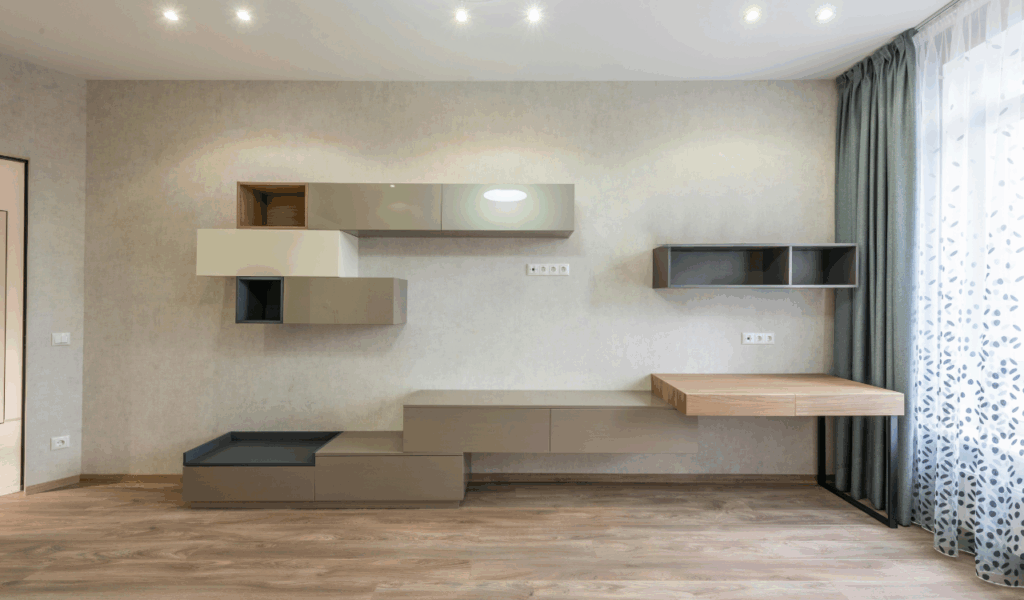
Mounting floating shelves directly into drywall without hitting studs is one of the most common causes of pull-out failure. Drywall simply is not designed to carry an ongoing load, especially when the weight sits several inches away from the wall. Even anchors rated for heavy loads can loosen under repeated stress. Each time an item is placed or removed, the fasteners shift microscopically. Over time, the drywall around the screws crumbles. The shelf begins to lean, then gap, and eventually pulls free. This failure often happens suddenly after weeks of slow weakening. What makes it frustrating is that the shelf may have felt secure initially. Without solid anchoring, gravity always wins.
4. Wide or Deep Floating Shelves Without Reinforcement
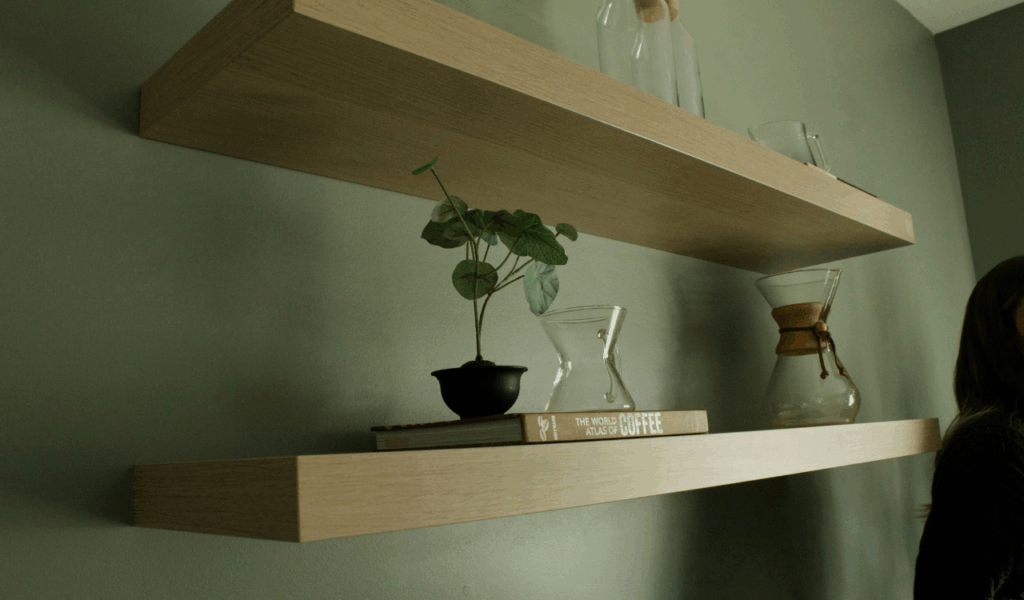
Oversized floating shelves create a dramatic visual impact, but size amplifies structural weaknesses. Wide shelves place more weight farther from the wall, increasing the downward force on the brackets. If internal supports are spaced too far apart, the center of the shelf becomes a stress point. Even solid wood can bow when unsupported over long spans. Homeowners often overload these shelves without realizing it, assuming the width implies strength. Instead, the shelf develops a gentle curve that worsens over time. Once sagging appears, it is nearly impossible to correct without reinstalling stronger supports. The result is a shelf that dominates the wall while quietly failing at its core.
5. Loose or Poorly Secured Bracket Systems
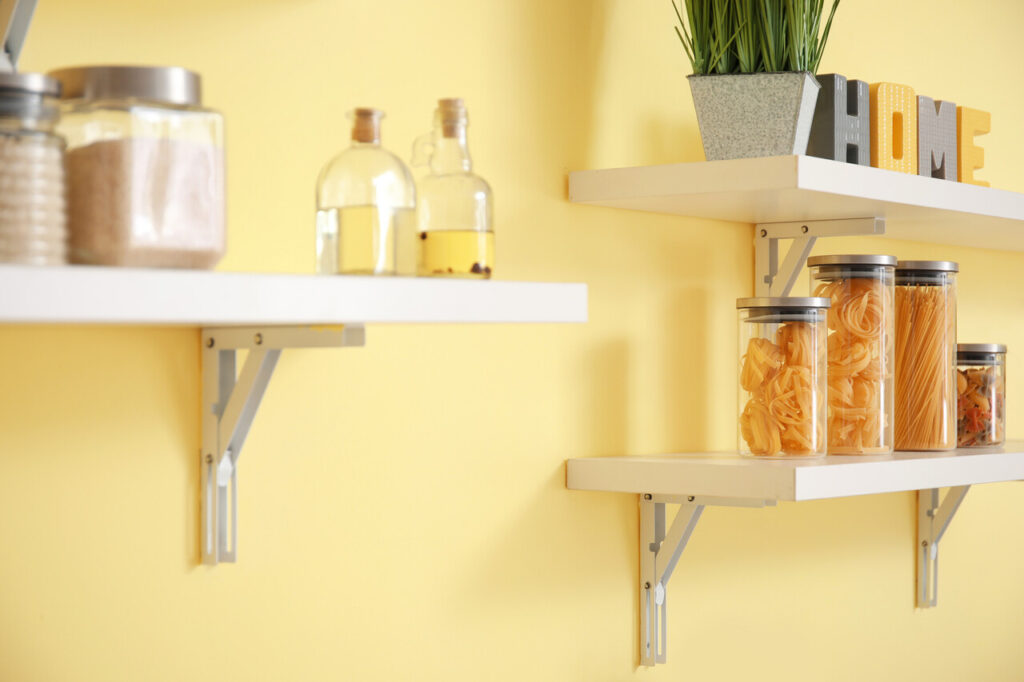
Even high-quality shelves fail when brackets are poorly installed or inadequately tightened. Floating shelf systems rely on precision. If screws are not fully seated or brackets are slightly out of level, stress is distributed unevenly. One side begins carrying more weight than the other. Over time, vibration from daily activity causes screws to back out just enough to matter. The shelf tilts, gaps appear at the wall, and the illusion of floating disappears. This type of sagging often creeps in slowly, making it easy to ignore until it becomes obvious. By then, simple tightening may no longer solve the underlying imbalance.
6. Shelves Loaded Beyond Their Intended Capacity

Many floating shelves are marketed with idealized weight limits that assume perfect installation and evenly distributed loads. Real life rarely works that way. Books cluster, dishes stack, and decor shifts. Exceeding a shelf’s capacity does not usually cause immediate collapse. Instead, it leads to gradual deformation. Brackets bend slightly, screws strain, and boards flex. Over months, the shelf develops a permanent downward slope. Homeowners often blame installation, but the real issue is a mismatch between use and design. Floating shelves are not universal storage solutions. Treating them as such almost guarantees sagging.
7. Shelves Installed on Uneven or Bowed Walls
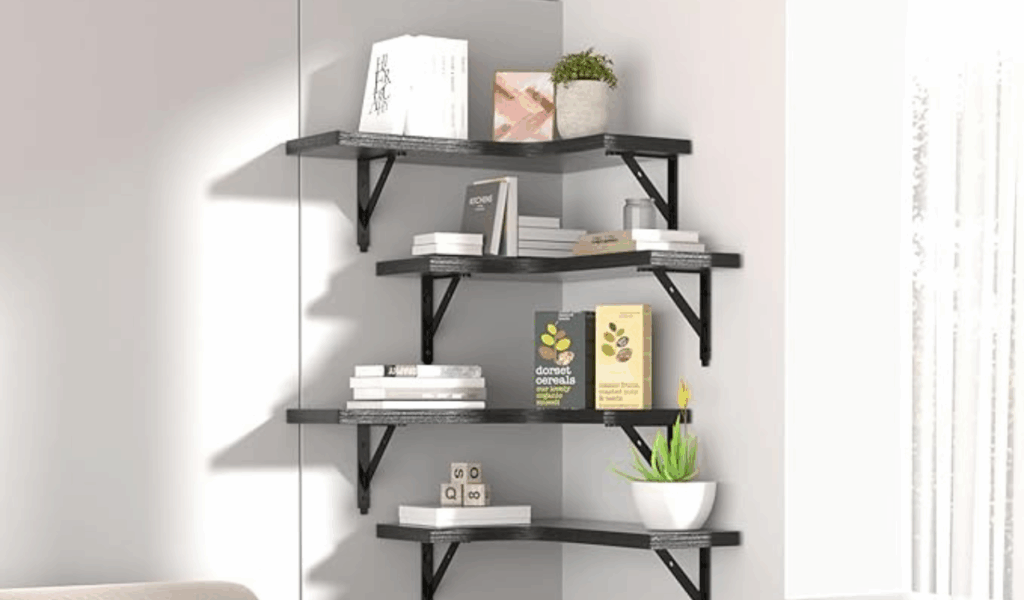
Walls are rarely perfectly flat, especially in older homes. Installing floating shelves on uneven surfaces creates hidden stress from day one. Brackets may sit flush in some spots while floating in others. When the shelf is attached, it is forced into alignment with the wall, introducing tension. Over time, that tension releases unevenly. The shelf pulls away at weak points or begins to tilt. This issue often appears even when studs are used. Without shimming or careful leveling, the shelf fights the wall instead of resting against it. The result is a gradual failure that feels mysterious but is entirely structural.
8. Floating Shelves in Humid or Moist Areas
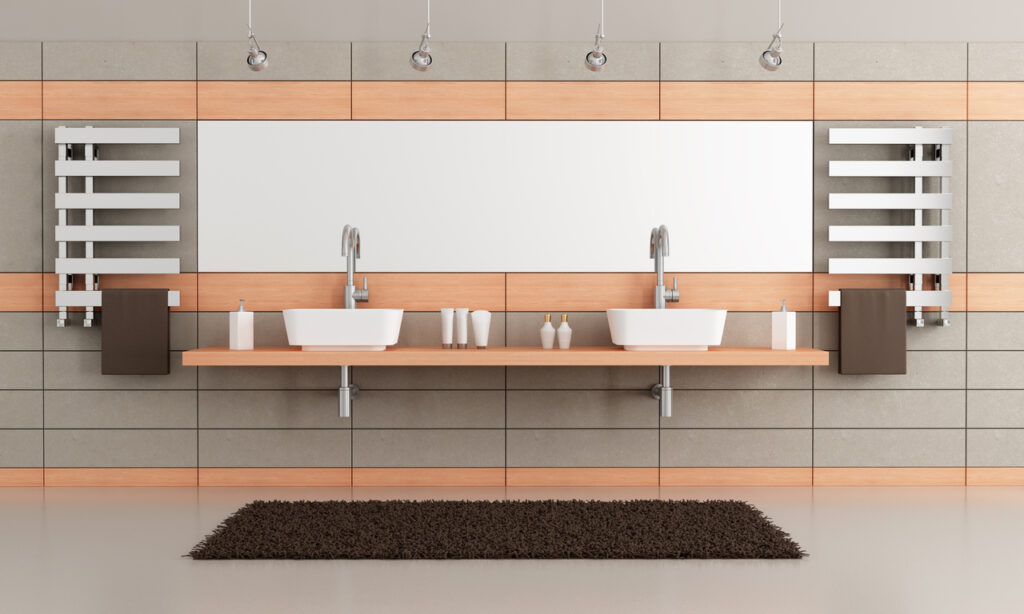
Moisture is an invisible enemy of floating shelves. Bathrooms, kitchens, and laundry rooms expose shelves to steam and fluctuating humidity. Wood-based shelves absorb that moisture, expanding and contracting repeatedly. Over time, this movement loosens joints and weakens internal supports. Even sealed finishes can fail under constant exposure. As the shelf warps, brackets lose their tight fit. The shelf begins to sag or pull forward, often unevenly. What starts as subtle distortion becomes a visible problem. Without moisture-resistant materials or proper ventilation, floating shelves in these areas almost always deteriorate faster than expected.