9 Storage Hacks That Complicated Things More Than They Helped
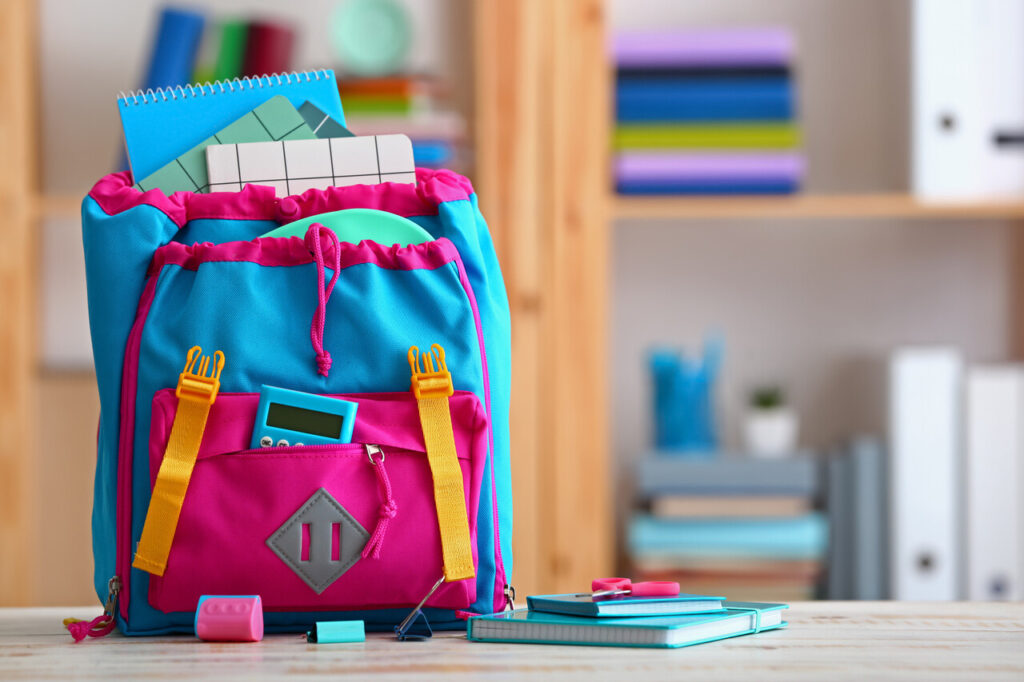
Back-to-school season brings a rush of organizing ideas that promise smoother mornings and calmer afternoons. Many of these storage hacks look clever and feel productive to set up, but daily routines quickly reveal their weaknesses. When systems require perfect sorting, constant updating, or extra steps to put things away, they tend to fall apart under real family schedules. Instead of saving time, they create new habits that are hard to maintain and easy to ignore. True simplicity comes from storage that matches how kids naturally move, drop, and grab their things. These popular hacks looked helpful at first, but they rarely made everyday school life easier.
1. Color Coding Everything That Turned Simple Sorting Into a Daily Puzzle
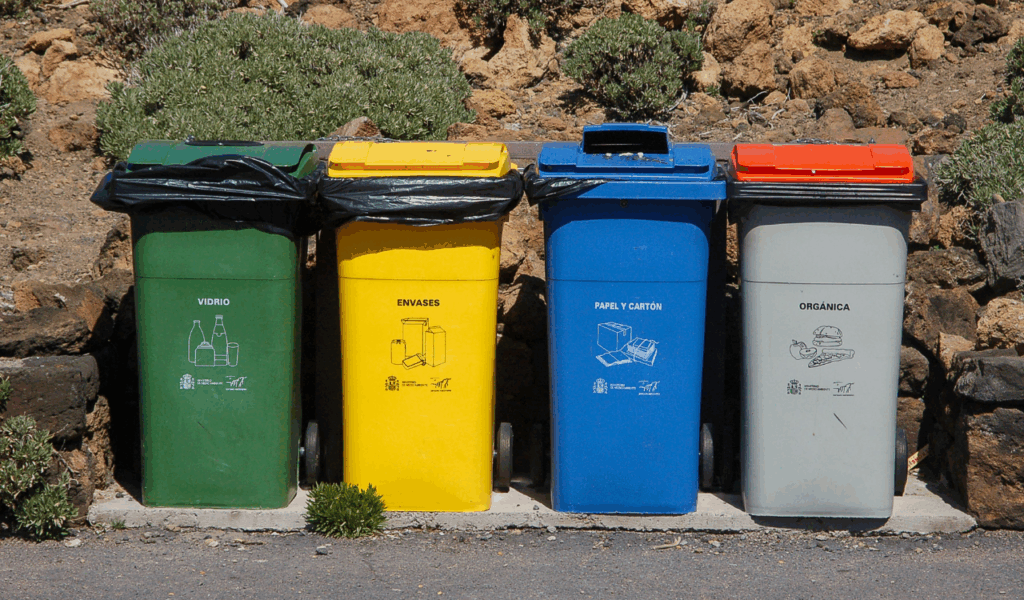
Color coding sounds helpful until every subject, child, and activity gets its own shade. What starts as a clear system quickly becomes confusing when folders, notebooks, lunch bags, and bins all rely on remembering specific colors. If one item is missing or replaced, the whole system feels broken. Kids also do not naturally think in color categories, so they often put things away wherever there is space. Parents then spend time re-sorting instead of saving time. Over time, new school materials rarely match the original color plan, forcing either exceptions or full resets. What was meant to reduce thinking actually adds another layer of rules that must be remembered every day, which is the opposite of simple storage.
2. Decorative Labels That Look Cute but Do Not Guide Behavior
Stylish labels with icons and fancy fonts photograph well, but they rarely help kids know where things truly belong. When labels are hard to read or too small, children stop paying attention to them. If supplies change during the year, labels also become outdated fast. Updating them takes extra time, and many parents stop bothering after the first few weeks. Without accurate labels, bins become mixed storage zones where items get tossed randomly. The system then depends on adults constantly correcting placement. A storage setup that requires ongoing maintenance to function is not simplifying life, it is creating another task that competes with already busy routines.
3. Homework Cubbies for Every Subject That Slow Down Retrieval
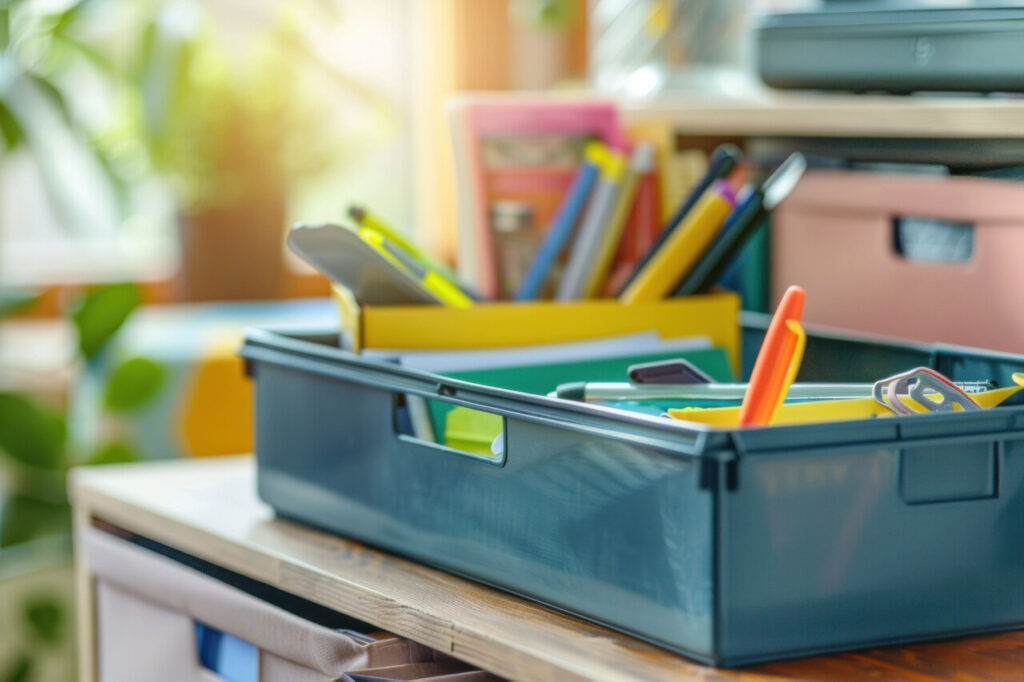
Subject-specific cubbies sound organized, but they often complicate daily transitions. Kids have to remember which bin holds which materials, and mistakes happen easily when tired or rushed. When assignments change, or new subjects are added, space runs out, and bins overflow. Papers get crammed into the wrong sections just to clear backpacks quickly. Parents then sort everything later, undoing the intended efficiency. Instead of one simple drop zone, families end up managing multiple small spaces that require constant supervision. In practice, fewer broader categories usually support faster habits than many narrow ones that expect perfect sorting.
4. Weekly Supply Tracking Charts That Become One More Chore

Tracking supplies sounds proactive, but logging pencils and paper every week rarely fits into real schedules. Charts require checking drawers, counting items, and updating forms consistently. When weeks get busy, the chart is skipped, and then it feels pointless to restart. Kids rarely update these charts on their own, so responsibility falls on parents. Meanwhile, shortages are usually noticed when homework cannot be done, not when charts suggest low inventory. Simple visual checks often work just as well without paperwork. A system that demands constant monitoring adds mental load without delivering meaningful time savings.
5. Multi-Slot Binder Racks That Make Mornings Slower
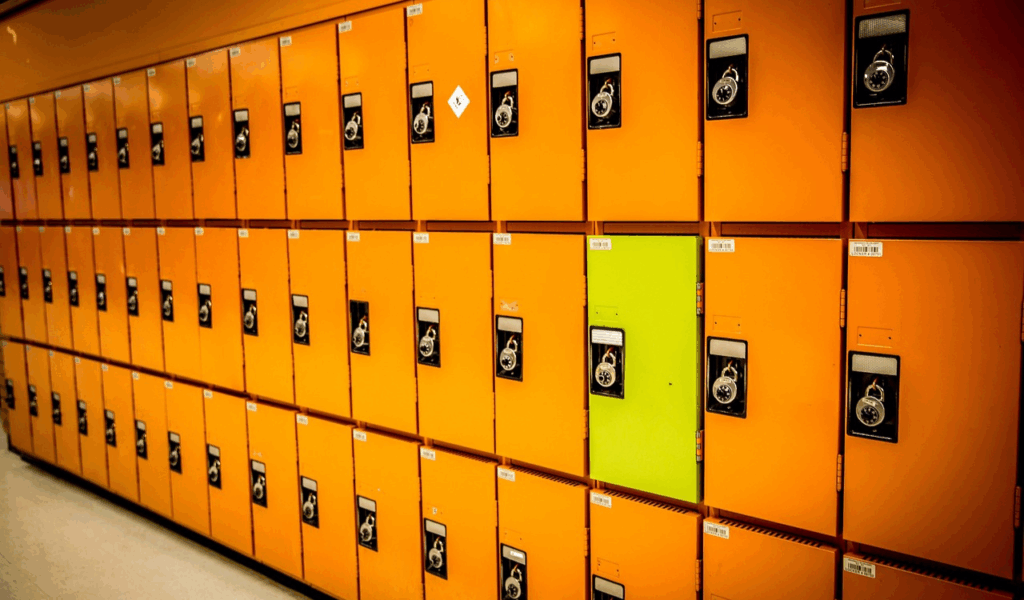
Storing binders in narrow slots looks tidy, but it often makes grabbing the right one harder. When binders are packed tightly, pulling one out can knock others over. Kids then shove them back wherever they fit instead of returning them to the correct spots. If one binder is thicker than the others, it disrupts the spacing and creates ongoing friction. Over time, racks get bypassed in favor of stacking binders on desks or floors. Storage should make actions faster, not more precise. Systems that require careful placement usually fail when people are rushing out the door.
6. Craft Caddies With Too Many Compartments to Manage
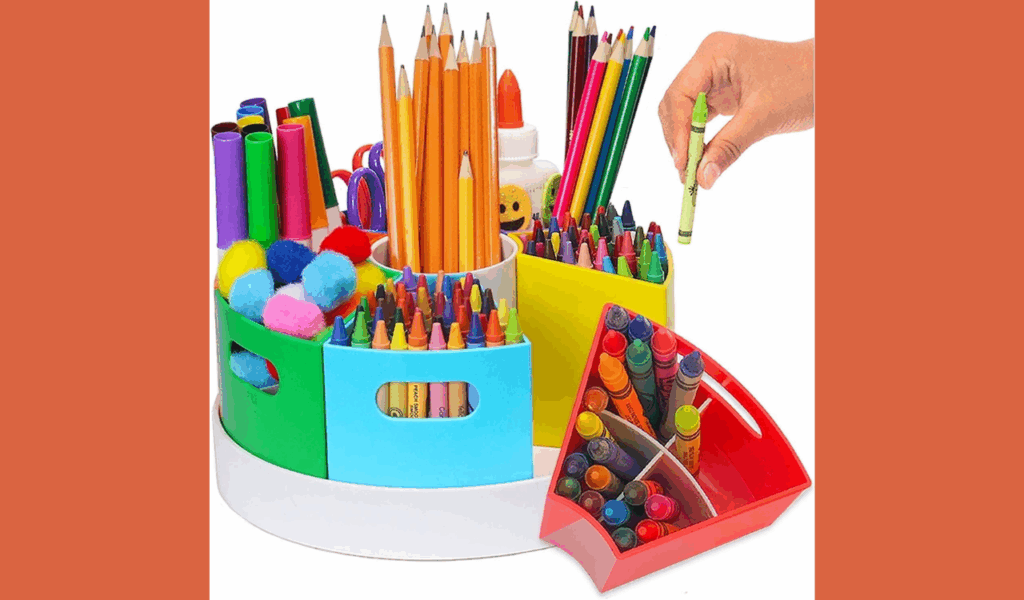
Caddies filled with tiny sections seem ideal for art supplies, but they often slow things down. Finding the right tool means opening lids, flipping trays, and sorting through crowded spaces. When kids are done, putting items back in exact compartments feels tedious, so everything gets dumped into one section. That defeats the original purpose and creates even more sorting later. Larger containers that accept mixed supplies tend to work better for everyday creativity. Storage that expects detailed organization from tired children rarely stays organized for long.
7. Paper Sorting Towers That Multiply Piles Instead of Reducing Them
Vertical paper sorters promise clear separation for homework, mail, and forms, but they often create more piles. Each slot becomes a temporary landing spot where papers wait for action that never comes. Over time, stacks grow, and categories blur. Papers also slide out or get bent when towers are full. Instead of encouraging follow-up, these systems delay decisions and allow clutter to build in visible layers. Real simplification usually comes from reducing incoming paper or handling it immediately, not by creating more holding zones that postpone sorting.
8. Magnetic Labels That Do Not Stay in Place Long Enough to Help
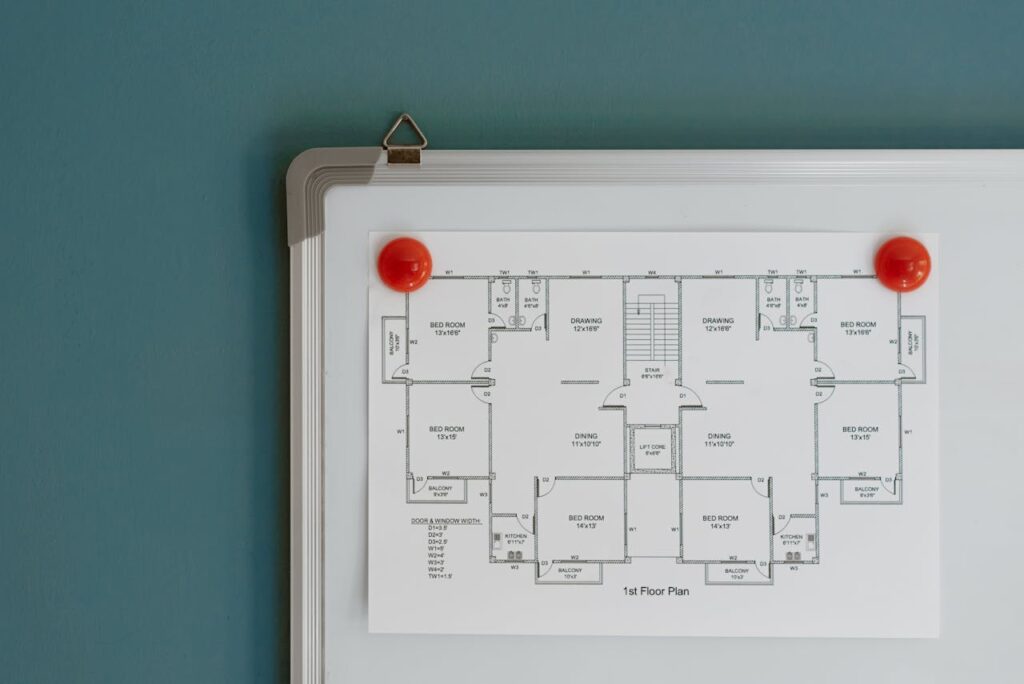
Magnetic tags look flexible, but they fall off easily when bumped or when bins are moved. Once labels slide or drop, kids no longer trust the system. Reattaching magnets becomes another small task that adds up over weeks. If labels are missing, containers quickly turn into generic dumping grounds. Reliable labeling needs to stay put through daily use. When identification is unstable, the entire system loses credibility, and people stop following it altogether.
9. Alphabetized Book Storage That Requires Constant Re-Sorting
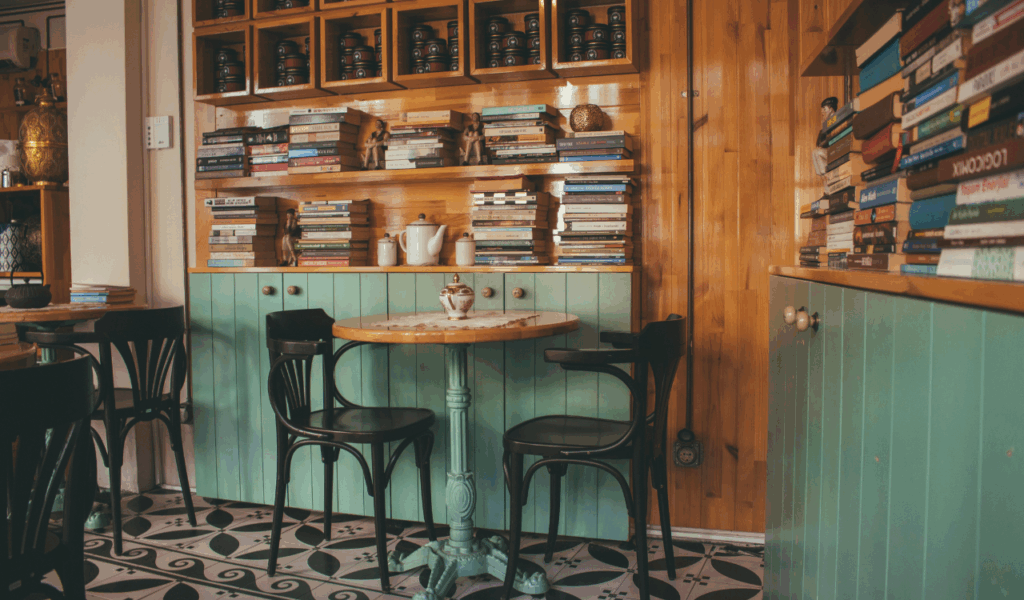
Alphabetizing books feels orderly, but it rarely matches how children choose reading material. Kids look for favorite characters, colors, or sizes, not titles. When books are returned incorrectly, the system breaks down fast. Fixing it takes time that could be spent reading or relaxing. As new books arrive, reshuffling the entire shelf becomes necessary. Simpler grouping by category or size usually supports quicker cleanup and easier access. A system that requires constant correction does not simplify daily life; it just shifts effort into maintenance.