12 Texas Hill Country Patios for Chill Hangouts
Texas Hill Country patios are designed with one priority in mind: slowing life down. Surrounded by limestone outcrops, live oaks, and wide skies, outdoor spaces in this region are shaped by heat, terrain, and long evenings that encourage lingering. Designers working here focus less on decorative excess and more on shade, airflow, and materials that age well under sun exposure. Comfort always outweighs spectacle. Furniture is chosen for lounging, layouts are meant to hold conversation, and transitions between house and landscape feel natural rather than staged. Whether tucked behind a ranch-style home or overlooking rolling hills and dry creek beds, these patios reflect a culture of unhurried gatherings, casual meals, and nights that stretch well past sunset without agenda or rush.
1. Limestone Courtyard Patios
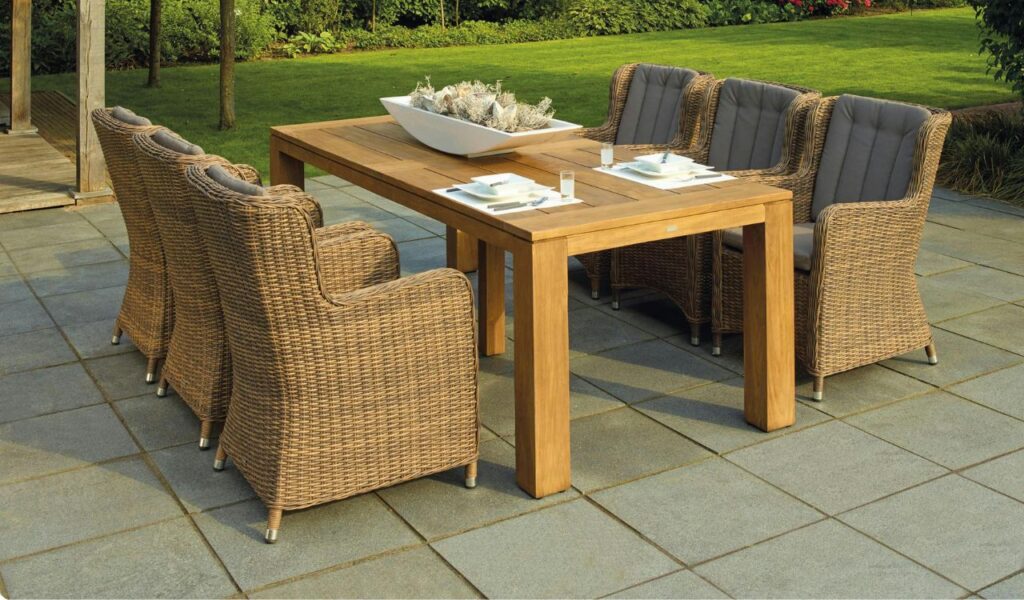
Limestone courtyard patios feel naturally grounded, making them especially well-suited to Hill Country conditions. Designers favor locally sourced limestone because it blends seamlessly with the surrounding terrain while remaining cooler underfoot than many other materials. The stone’s pale, muted tones reflect sunlight instead of absorbing it, helping seating areas stay more comfortable during hot afternoons.
These courtyards often feature low perimeter walls that double as informal seating, creating an enclosure without heaviness. The contained layout reduces wind exposure while maintaining openness to the sky. This balance produces a calm, protected environment that feels intentional yet relaxed, ideal for long conversations and slow evenings outdoors.
2. Covered Oak-Shaded Patios
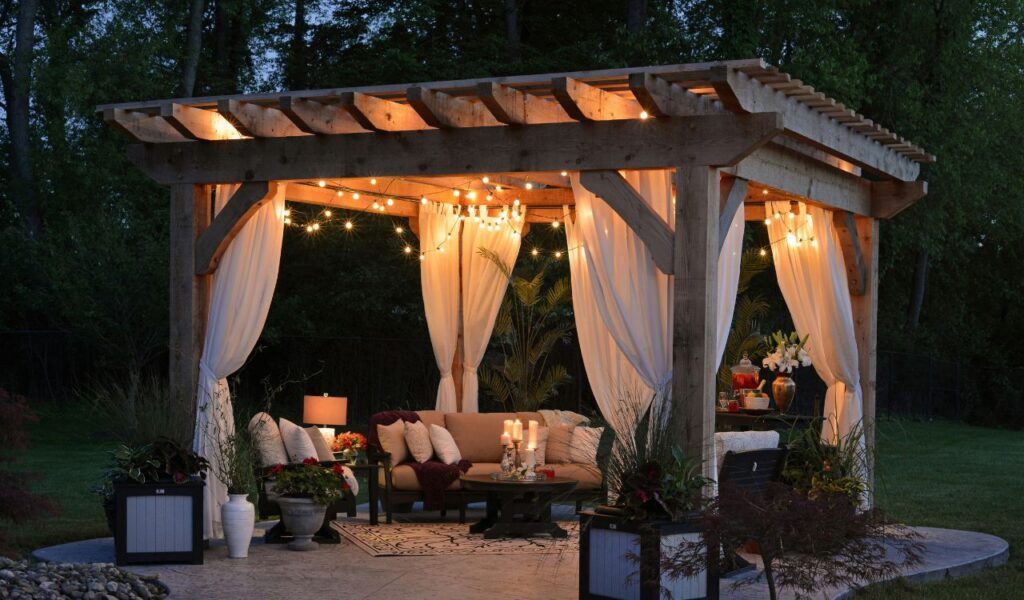
Patios built beneath mature oak trees benefit from shade that no manufactured structure can truly replicate. Designers frequently plan around existing trees, letting the canopy determine furniture placement and circulation. This approach keeps patios cooler while preserving the land’s natural character rather than fighting it.
The shifting, dappled light that filters through oak branches creates an atmosphere that evolves throughout the day. Mornings feel quiet and cool, while evenings soften into warm shade. These patios feel organic and unforced, making them perfect for extended hangouts that begin in the afternoon and stretch effortlessly into night.
3. Pergola Patios with Open Rafters
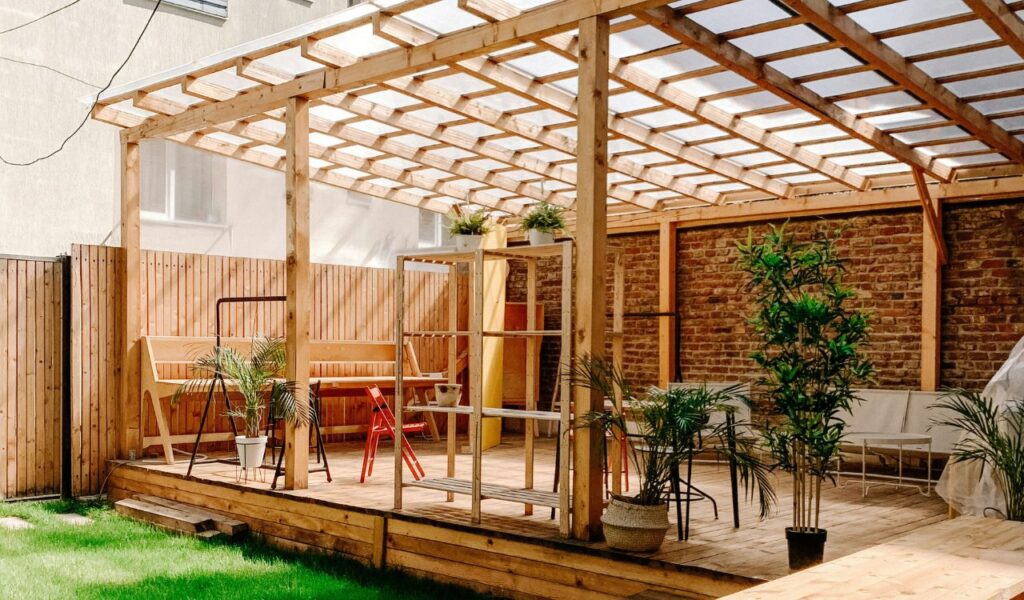
Open-rafter pergolas are a common Hill Country solution for balancing shade and airflow. Designers space beams to soften direct sunlight while allowing heat to escape upward, preventing the patio from feeling stagnant. Wood finishes are often left natural or lightly sealed to blend with the surrounding limestone and vegetation.
This structure defines the patio without enclosing it. The open rafters create a visual rhythm while maintaining a connection to the sky. The result is a space that feels protected but breathable, comfortable for dining, lounging, or casual drinks, even during peak summer heat.
4. Hilltop View Patios
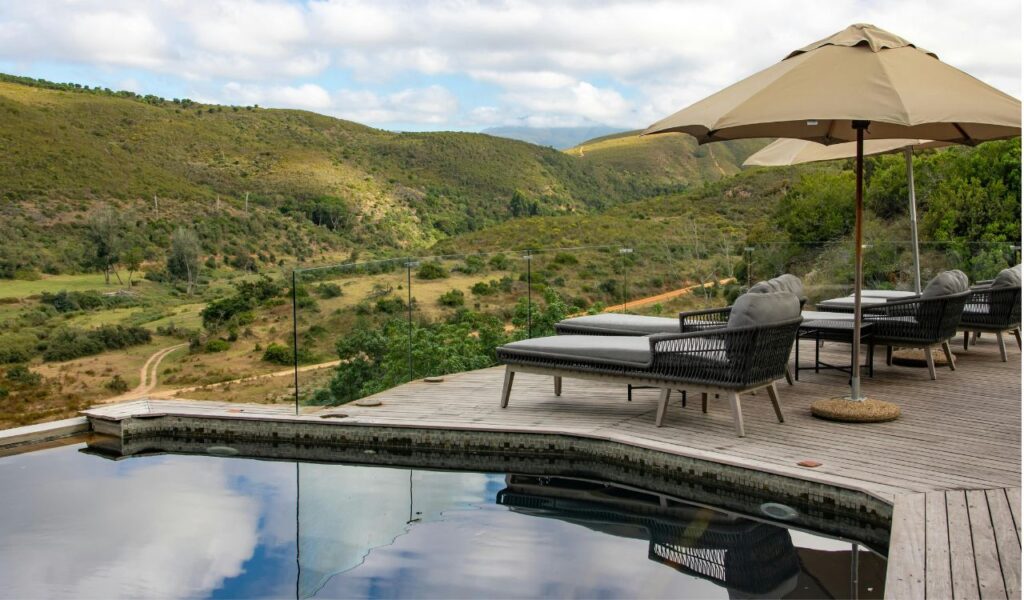
Hilltop view patios rely on elevation rather than embellishment, using the surrounding landscape as the primary design feature. Designers carefully orient seating, walkways, and gathering zones to capture long sightlines across rolling hills, valleys, or treetops. Railings are kept minimal, and furniture profiles stay low so nothing interrupts the view. Instead of decorative excess, the layout prioritizes orientation, balance, and visual calm, allowing the setting to define the space.
With the landscape taking center stage, these patios naturally slow the pace of gatherings. Conversation unfolds without background noise or visual clutter, and changing light becomes part of the experience as afternoons fade into sunset. The space feels reflective rather than performative, making it ideal for relaxed evenings where presence matters more than activity and the view quietly does the work.
5. Fire Pit-Centered Patios
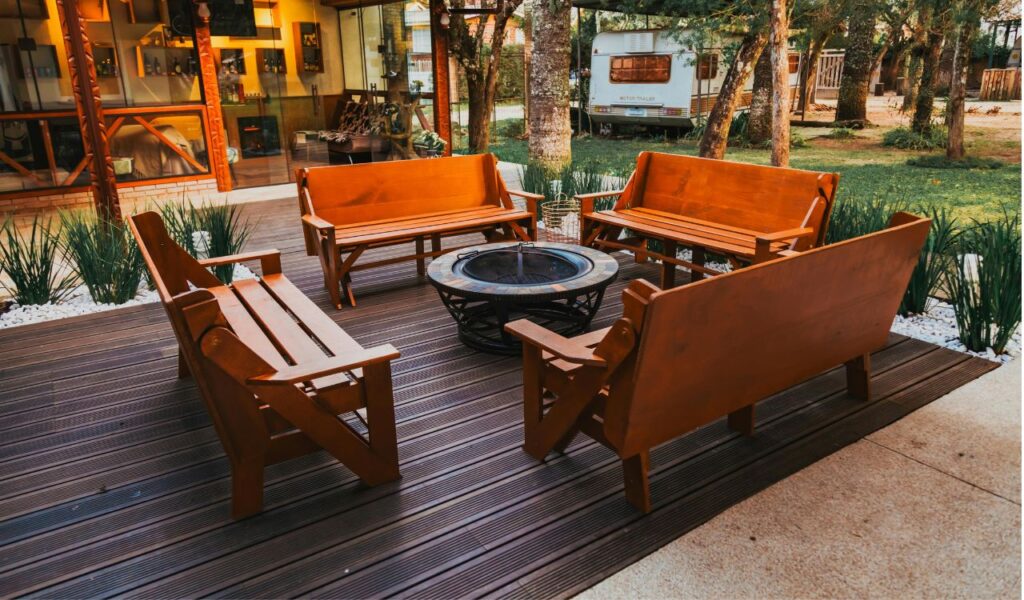
Fire pit-centered patios extend outdoor living well beyond daylight hours. In Hill Country designs, low circular pits are favored because they encourage people to face one another, supporting conversation rather than directing attention back toward the house. Stone and steel materials handle temperature swings while maintaining a rustic, durable feel.
As the sun sets, the fire becomes a natural focal point. It provides warmth during cooler months and visual grounding year-round. These patios shift easily into nighttime destinations, turning casual hangouts into longer, more connected gatherings without requiring additional structure or effort.
6. Ranch-Style Wraparound Patios
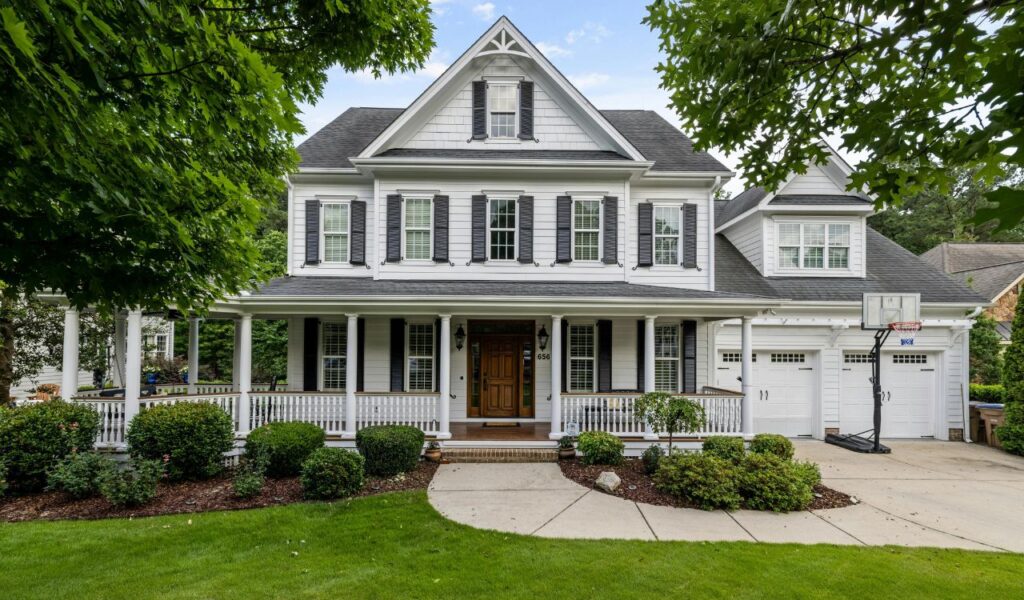
Ranch-style wraparound patios borrow from traditional Hill Country architecture, using a continuous outdoor path to connect multiple seating zones. Designers favor this layout because it spreads activity naturally instead of concentrating everyone in one spot. The patio becomes an extension of the home’s perimeter, encouraging movement and casual interaction.
This format supports different moods at the same time. One area may host conversation and drinks, while another remains quiet for reading or shade. The flexibility allows gatherings to expand or contract without feeling crowded, making the patio adaptable to changing group sizes and long, unstructured hangouts.
7. Creekside Stone Patios
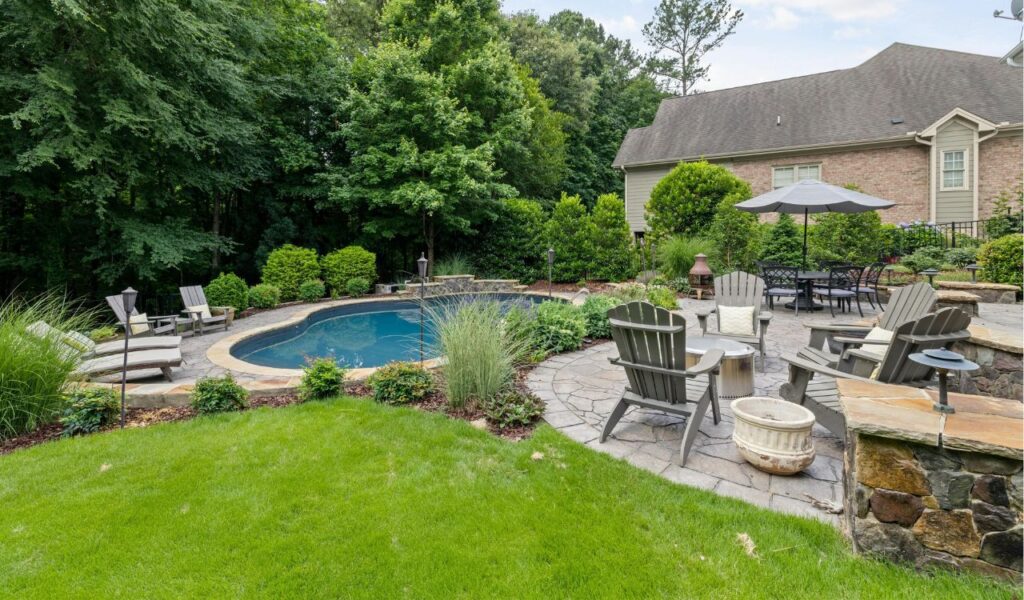
Creekside stone patios take advantage of natural cooling and ambient sound. Designers select stone, gravel, and raised foundations that tolerate occasional moisture while blending seamlessly into the landscape. Seating is typically lightweight and movable, allowing homeowners to adjust layouts depending on shade, water levels, or time of day.
The gentle sound of flowing or trickling water adds a calming backdrop that enhances conversation rather than competing with it. These patios feel secluded and restorative, offering a quiet counterpoint to open hilltop spaces. They are especially suited for low-key gatherings where presence and atmosphere matter more than activity.
8. Gravel Patios with Casual Seating
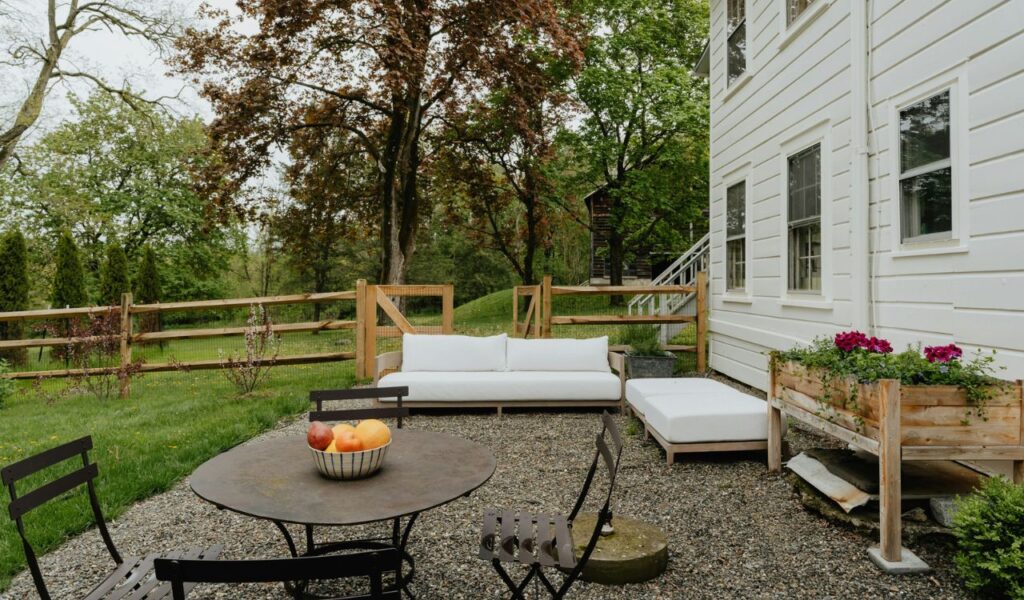
Gravel patios are a practical solution for Hill Country properties with uneven terrain and drainage challenges. Designers often choose decomposed granite or pea gravel because it adapts easily to slopes and requires minimal upkeep. Casual seating like Adirondack chairs or modular loungers reinforces the relaxed intent of the space.
This approach keeps the patio flexible and informal. Furniture can be rearranged as needed, and the subtle crunch underfoot signals that the space is meant to be used, not preserved. The result is an environment that feels approachable and unpolished in a way that supports easy, spontaneous hangouts.
9. Outdoor Kitchen Lounge Patios
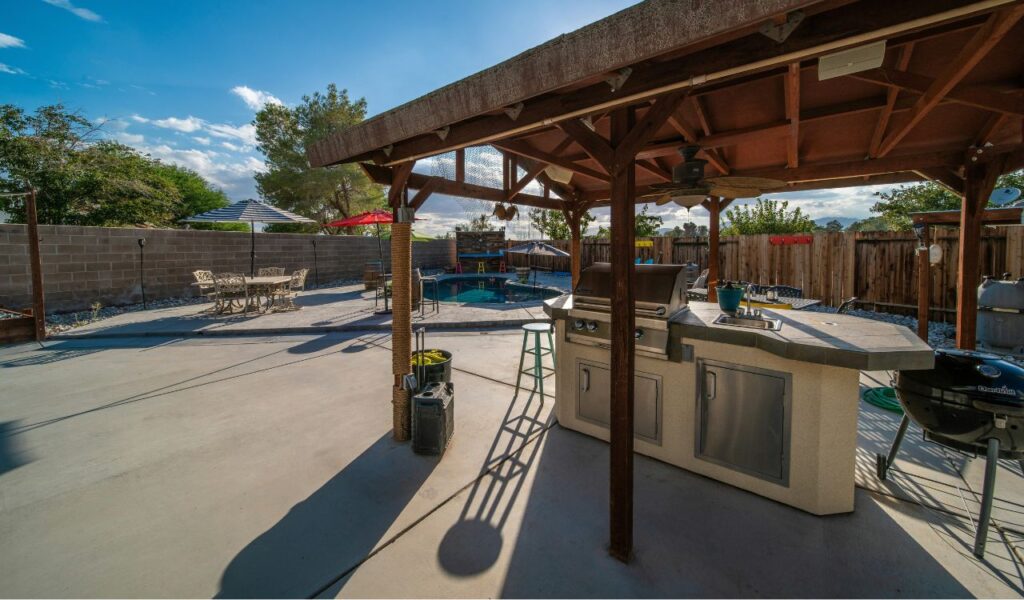
Outdoor kitchen patios in Hill Country settings emphasize connection over performance. Designers prioritize shaded prep surfaces, grills, and simple counters rather than full appliance suites. Seating is placed nearby, so cooking remains part of the social experience instead of a separate task.
This layout encourages gradual, unstructured meals. People move freely between prepping, eating, and relaxing without rigid timing. The patio functions more like a communal lounge than a formal dining area, reinforcing the region’s preference for easy gatherings that unfold naturally rather than following a fixed schedule.
10. Poolside Shade Patios
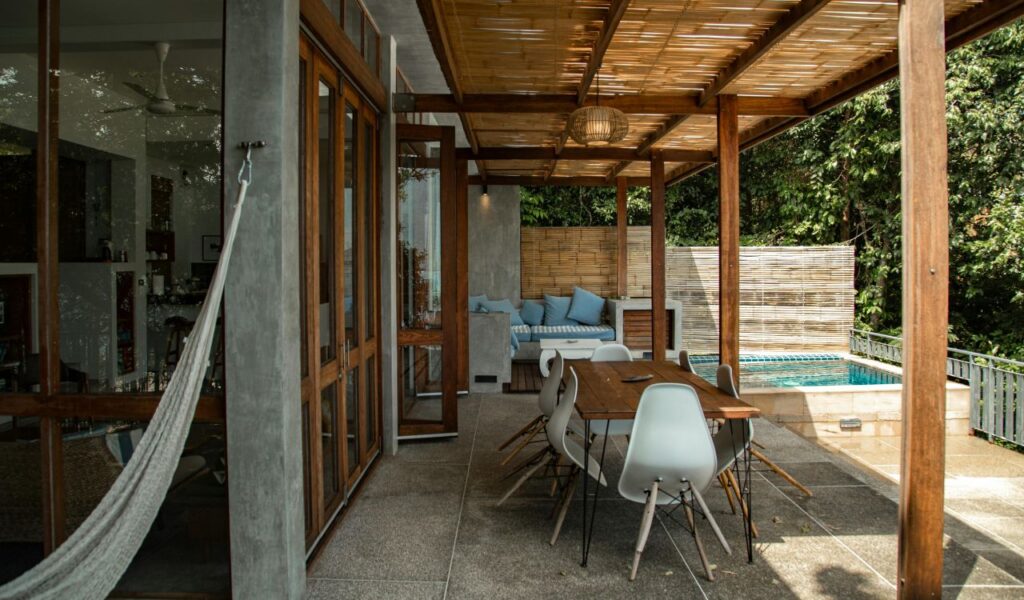
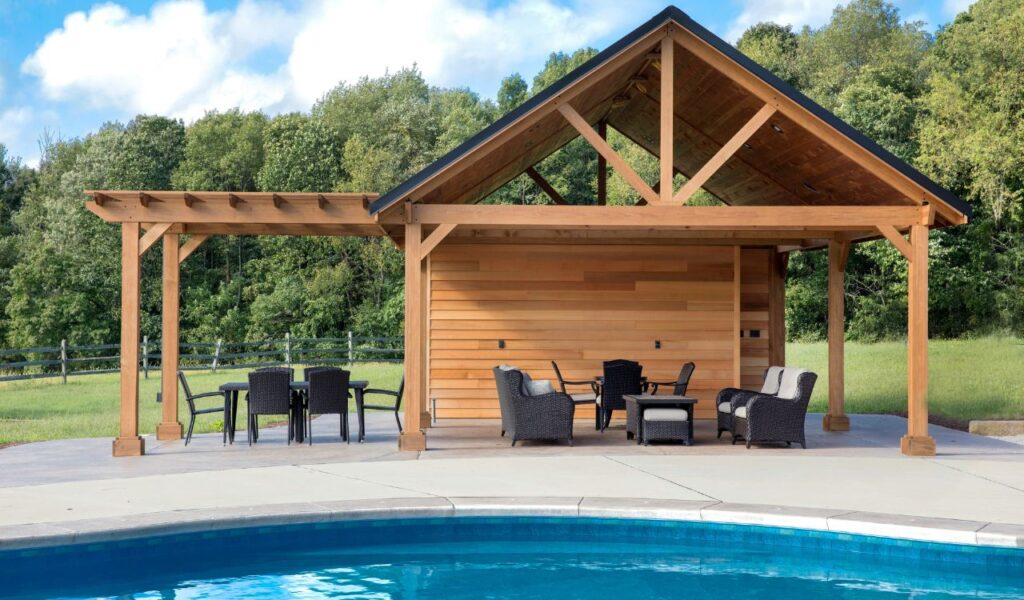
Poolside shade patios in the Texas Hill Country are designed first and foremost for heat recovery rather than visual drama. Designers prioritize covered seating, breathable cushions, and slip-resistant surfaces to create a space that feels safe and restorative after time in the sun. Shade structures are treated as functional necessities, using pergolas, solid roof extensions, or fabric canopies positioned to block harsh afternoon light. Materials are chosen to stay cool to the touch and withstand constant exposure to water, sunscreen, and heat.
These patios function as true transition zones between activity and rest. People naturally gather here between swims, lingering with cold drinks, snacks, and conversation without needing to retreat indoors. The layout encourages slowing down, allowing energy levels to reset while still keeping everyone connected. This balance between movement and rest is what gives poolside shade patios their lasting appeal.
11. Minimalist Concrete Slab Patios
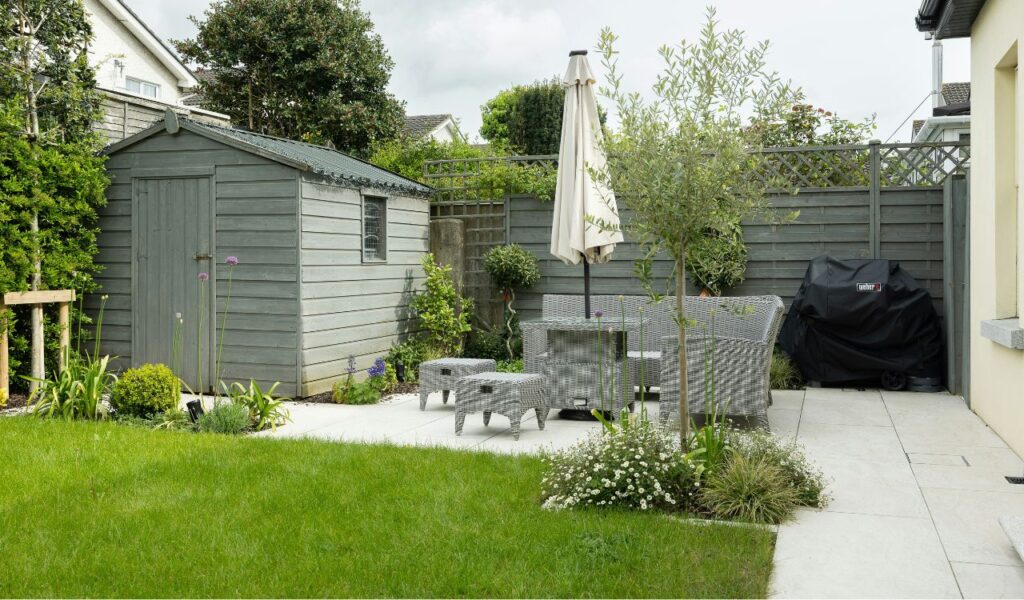
Minimalist concrete slab patios work well in Hill Country homes that favor clean lines and understated design. Designers value concrete for its durability, thermal stability, and ability to handle uneven terrain. To prevent the surface from feeling stark or industrial, it is softened with outdoor rugs, planters, and wood or woven furniture that adds warmth and texture. Color palettes remain restrained, allowing the surrounding landscape to take visual priority.
This simplicity keeps the patio calm and visually quiet. Without excess décor, the space feels grounded and intentional, supporting slower moments like morning coffee or evening reflection. Rather than competing with nature, the patio acts as a neutral platform that frames views, encourages stillness, and reinforces the relaxed rhythm that defines Hill Country outdoor living.
12. String-Light Evening Patios
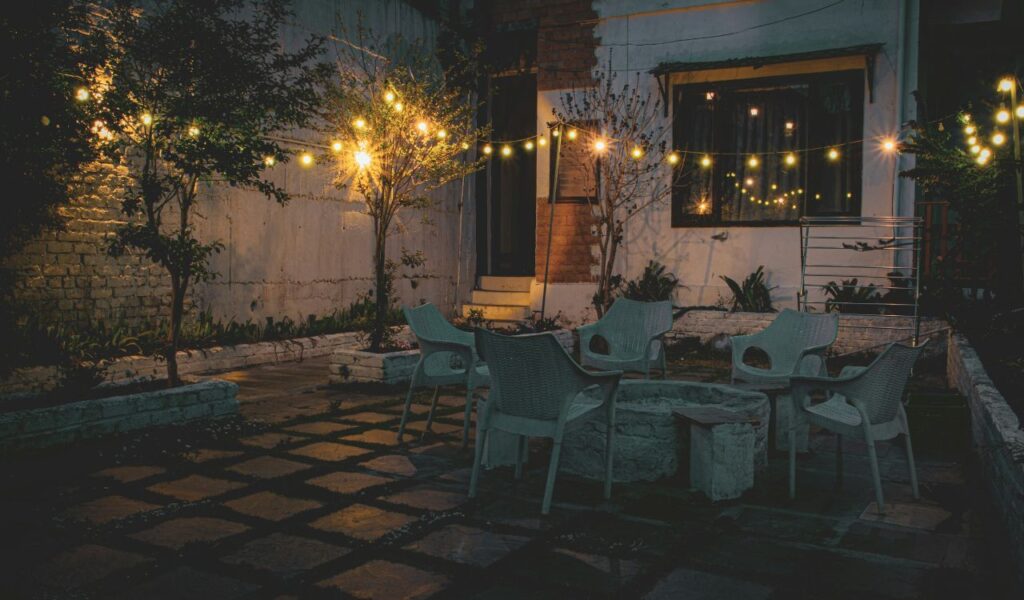
String-light patios extend Hill Country hangouts well into the evening. Designers use warm, low-glow bulbs to create ambient lighting that feels welcoming rather than bright. Lights are typically draped along beams, trees, or fence lines, following seating paths instead of rigid symmetry.
This soft illumination changes how the patio is used after dark. Conversations linger, and the atmosphere becomes more intimate without feeling enclosed. The lighting reinforces the region’s laid-back approach to outdoor living, where nights unfold gradually and guests stay simply because the space feels good.