
6 Ways to Incorporate Textiles for Texture Without Clutter
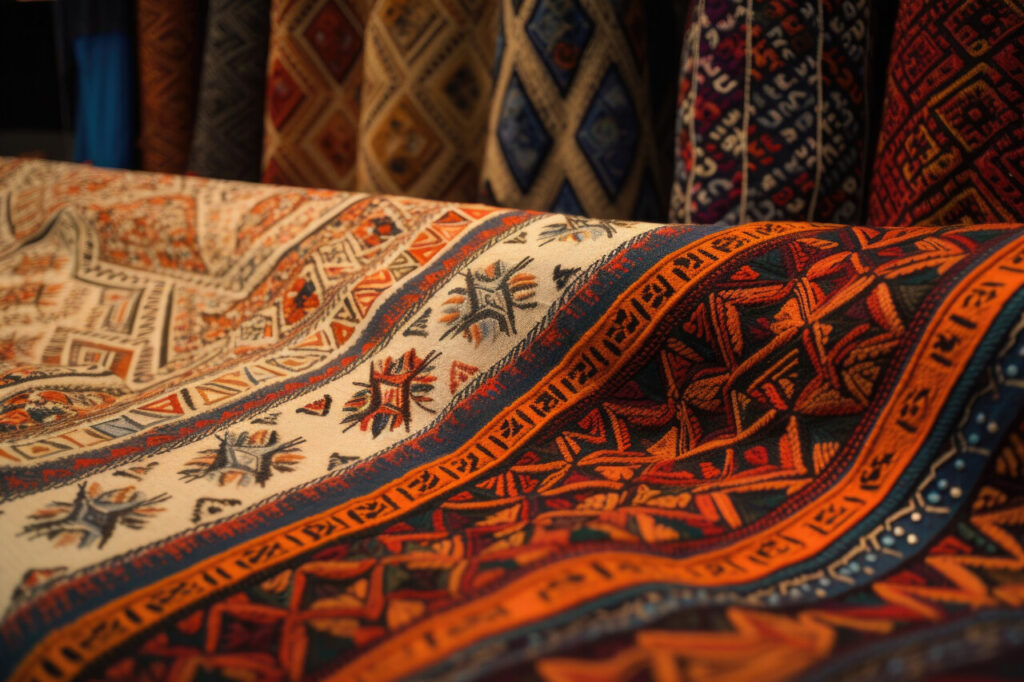
Texture can transform a room, but it only works when it feels intentional. The goal is to bring in warmth, depth, and softness without piling on fabrics until the space feels busy. When textiles are used with purpose, they add quiet richness to a room, soften hard edges, and make everyday spaces feel more welcoming. The key is choosing the right placements and combinations so each textile earns its spot and enhances the room rather than competing for attention.
1. Layer Area Rugs For Depth Without Overcrowding

Layering rugs is one of the easiest ways to introduce texture without filling the room with more furniture. The trick is to treat the floor like a composition, not a dumping ground for shapes and colors. Start with a large, simple base rug in a natural fiber like jute, sisal, or a low-pile neutral. This gives you warmth and defines the zone under a sofa or dining table. Then add a smaller rug on top that brings in pattern, color, or a different weave. Because the upper rug covers only part of the base, the eye reads the area as one layered surface, not two competing pieces.
2. Use Throws And Blankets As Intentional Layers
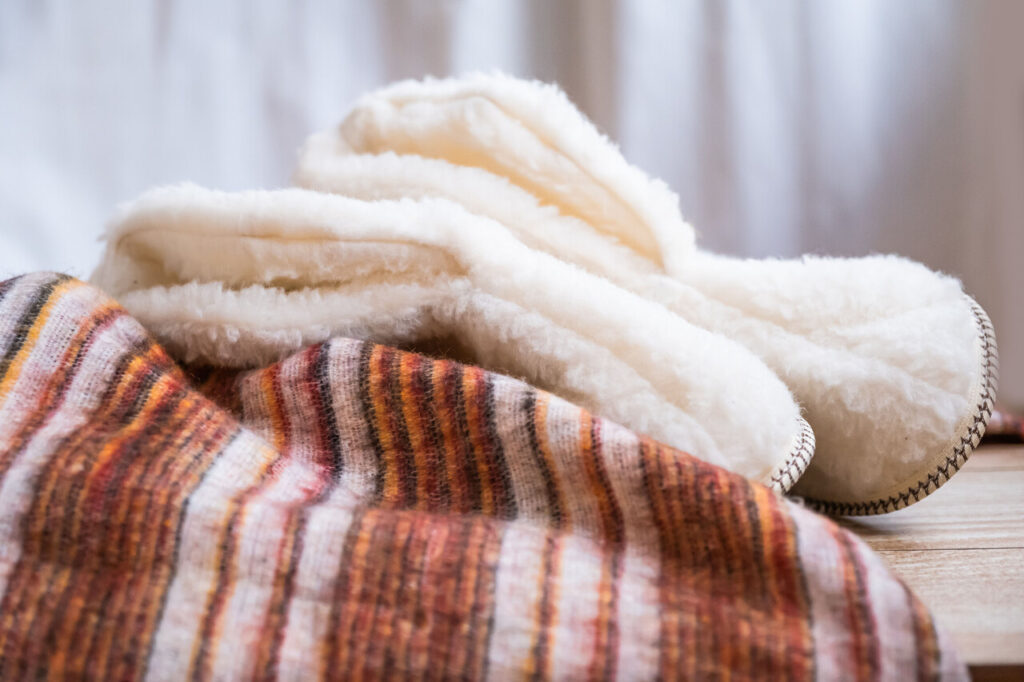
Throws can make a room feel cozy, but only when they are used deliberately. Instead of casually tossing blankets everywhere, give each one a clear place and purpose. On a sofa, a throw folded lengthwise and draped over the back or arm adds texture while keeping the seat open. At the end of a bed, a neatly folded blanket across the lower third introduces a new fabric without hiding the main bedding. Opt for a mix of materials, such as a knit paired with smooth cotton or a light wool over linen, so the contrast reads clearly. Limiting yourself to one or two throws per room keeps things from feeling messy.
3. Mix Fabric Textures Instead Of Adding More Objects
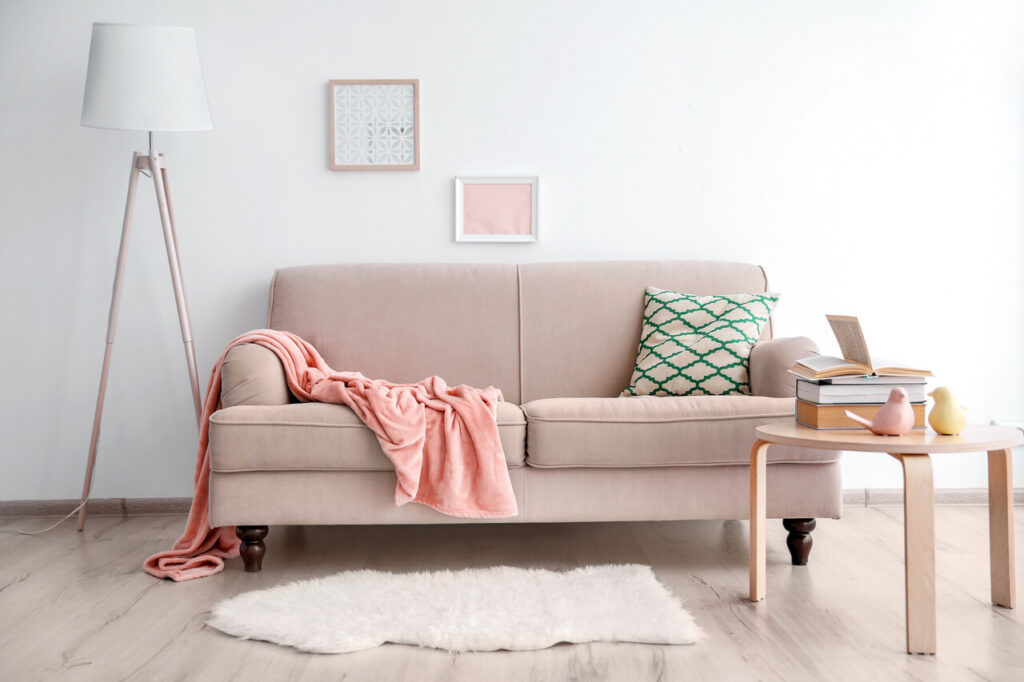
If a room feels flat, it often needs different textures, not more accessories. Instead of adding extra cushions or decor, first look at what you already have and vary the fabrics. Pair a smooth linen or cotton sofa with cushions in velvet, bouclé, or a subtle woven pattern. Add one cushion in a chunky knit or embroidered surface to break up large areas of uniform fabric. On a bed, you can combine crisp percale sheets with a washed cotton or linen duvet and a slightly textured quilt. Because all these changes happen within existing pieces, you avoid cluttering surfaces.
4. Hang Textiles On Walls To Free Up Surfaces
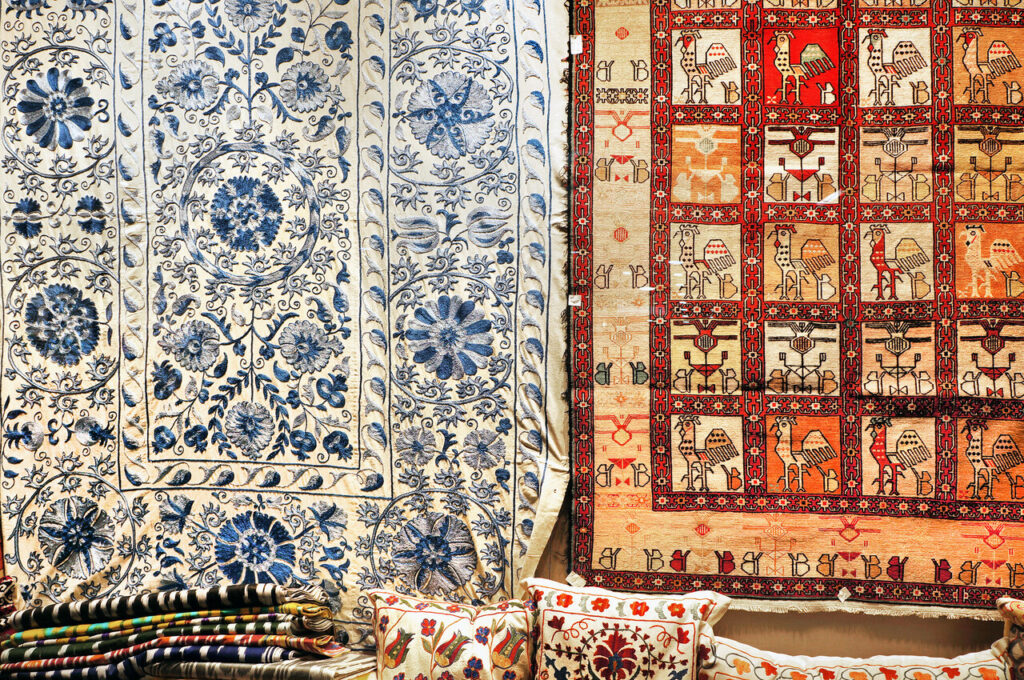
Textiles do not need to live only on furniture and floors. Putting them on the wall is a smart way to add warmth and pattern without using up any horizontal space. A single well-chosen textile hanging, such as a woven wall piece, a kantha, a kilim, or block block-printed cloth, can take the place of multiple smaller artworks. It softens acoustics, reduces echo, and visually warms hard surfaces like plaster or concrete. Framing fabric behind glass is another option if you prefer a more tailored look. The key is scale. Choose a textile large enough to relate to the furniture below it so it feels like part of the architecture, not an afterthought.
5. Layer Curtains And Blinds Around Windows
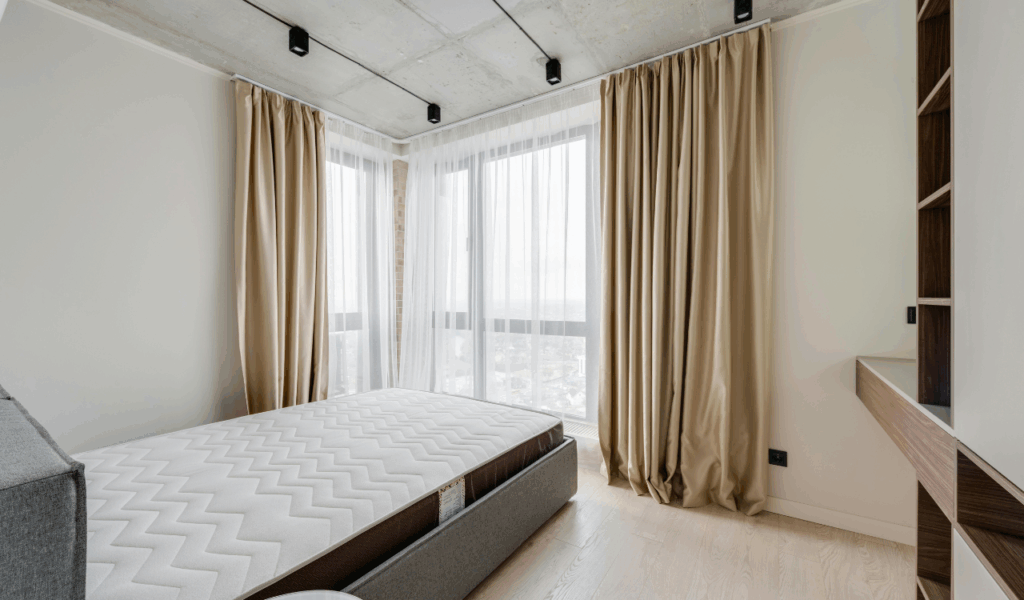
Windows are natural spots for adding textile texture, and they do it without crowding the room if you keep the layers controlled. A simple combination is a functional blind or roller shade for privacy and light control, paired with fabric curtains that soften the edges. Sheer curtains filter daylight and add movement, while a second set of heavier drapes can frame the window and provide insulation or blackout when needed. Hanging curtains higher and wider than the actual window makes the opening look larger and turns the fabric into a vertical element that draws the eye up.
6. Keep A Neutral Base And Let Textiles Be The Accent
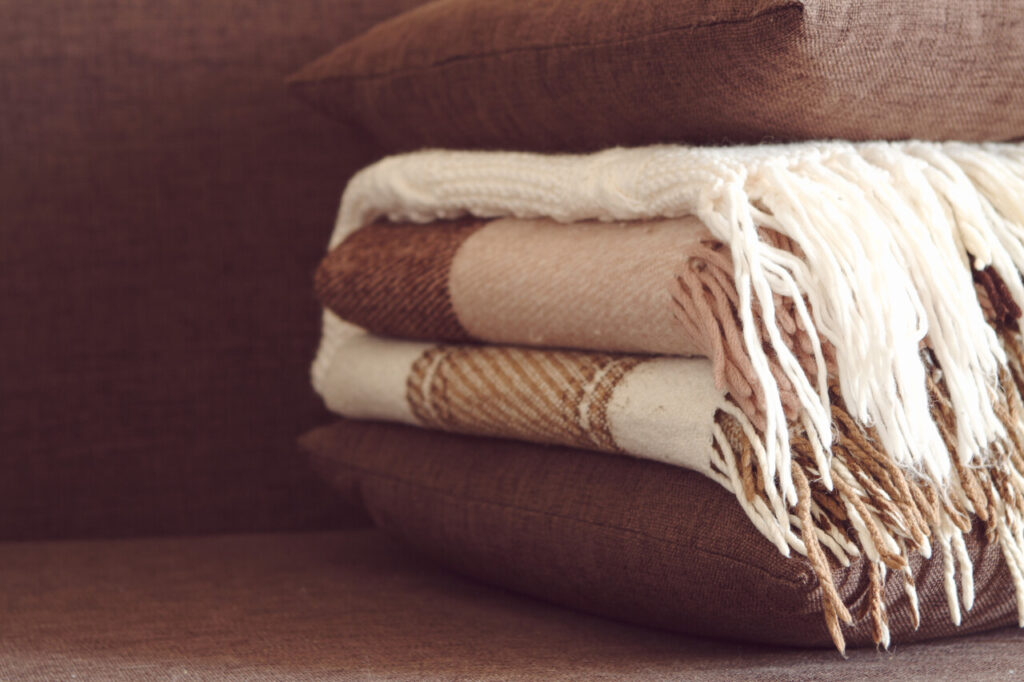
A neutral base is what keeps textured textiles from becoming too much. When walls, large furniture, and big rugs sit in a palette of whites, beiges, grays, or soft earthy tones, you have room to play with fabric without overwhelming the space. Cushions, throws, runners, smaller rugs, and wall textiles can then carry more pronounced weave, quilting, or pattern. The room still feels consistent because the underlying colors are restrained. This approach also makes editing easier. If a space starts to feel busy, you can remove or rotate a few textile accents while the core pieces remain harmonious.