9 Regional Hot Dog Styles Across America
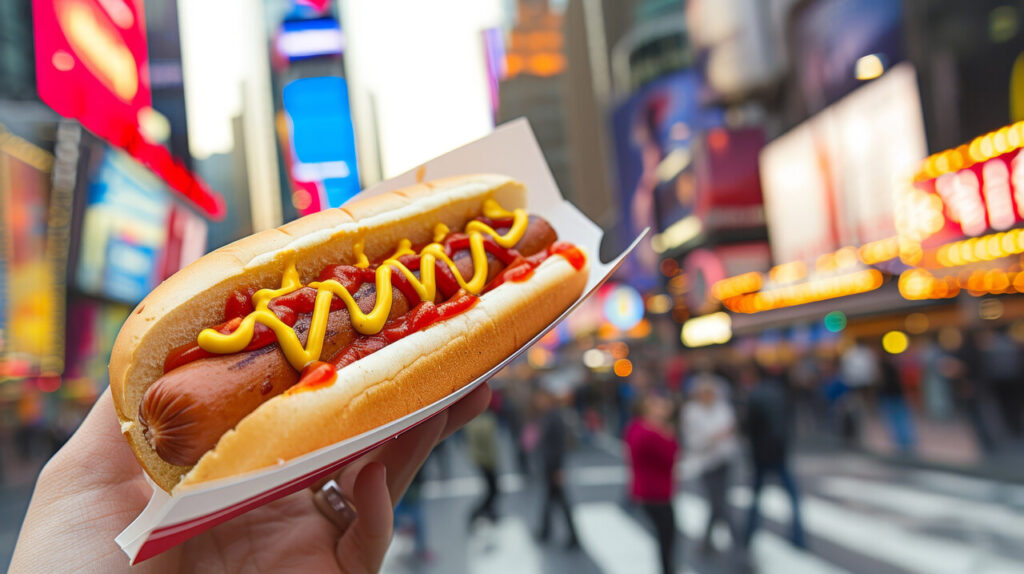
Regional hot dogs tell you more about a place than most people expect. They reflect immigrant histories, local tastes, and the way food evolves when it’s passed from diner counters to ballparks to street carts. What this really means is that every style has a reason for existing, whether it’s a special sauce, a particular casing, or a topping combination that only makes sense once you try it. These hot dogs aren’t just riffs on the same idea. They’re snapshots of how different parts of America built their own flavor traditions one bun at a time.
1. Sonoran Hot Dog
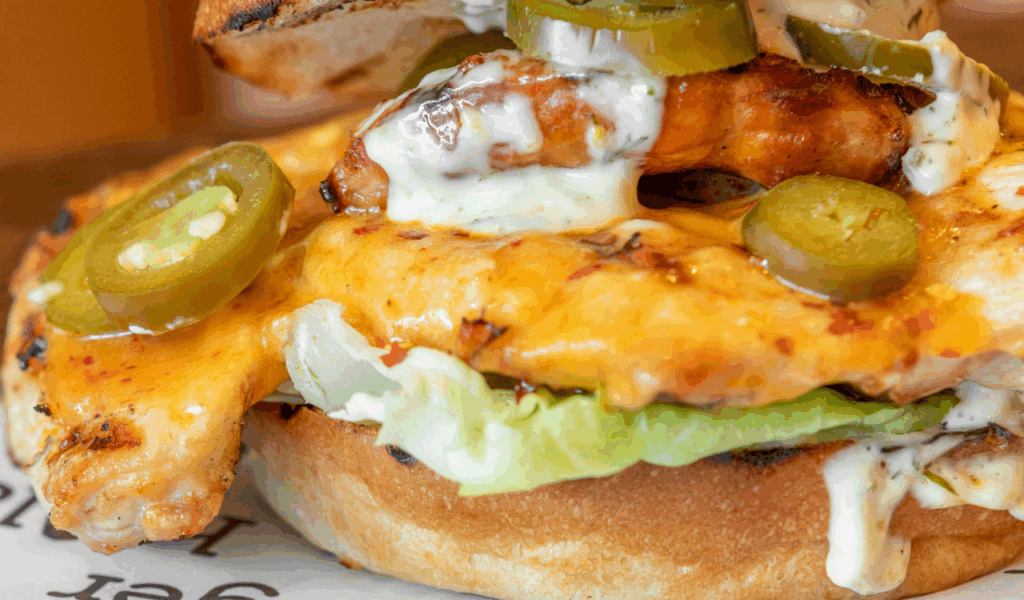
What sets the Sonoran hot dog apart is that it basically turns a hot dog into a full borderlands meal in a bun. This style was born in Hermosillo, Sonora, and then exploded in Tucson and Phoenix, where street carts still serve them late into the night. The dog itself is wrapped in bacon and grilled until the casing tightens and the bacon crisps. It goes into a soft, bolillo-style bun that is sturdier than a standard hot dog roll. From there, it gets pinto beans, chopped onions, tomatoes, and usually a trio of sauces like mayonnaise, mustard, and a jalapeño salsa. Many vendors add a grilled chile on the side.
2. Michigan Hot Dog
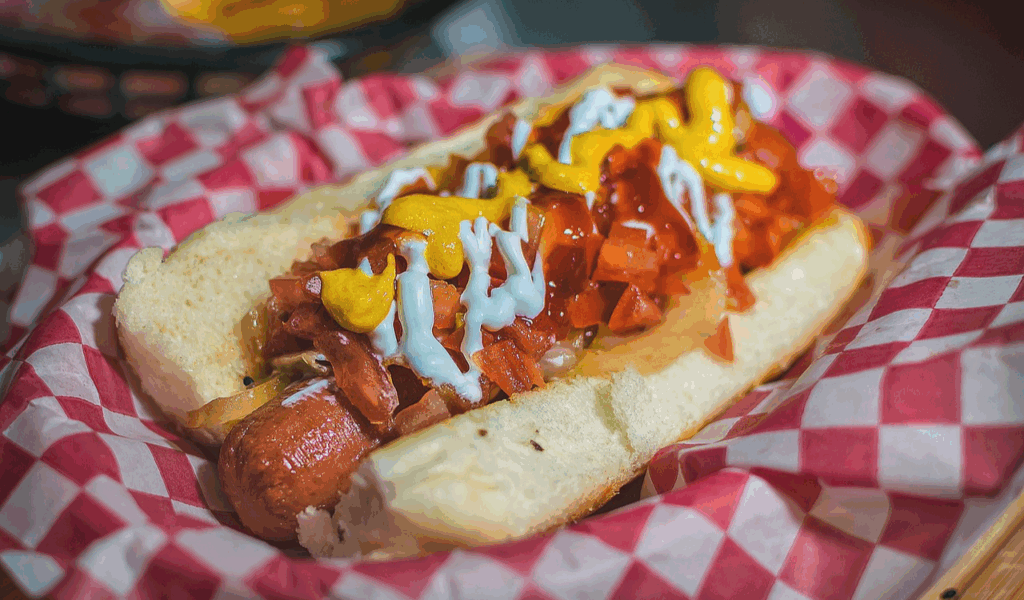
The Michigan hot dog is a good example of how names and geography in American food rarely line up neatly. Despite the name, this style is tightly tied to Plattsburgh and the Lake Champlain area of New York, where it has been a local fixture for nearly a century. A typical Michigan is a steamed all-beef dog in a soft, split top bun, covered with a thick, finely textured meat sauce known locally as Michigan sauce. The sauce is tomato-based, heavily seasoned, and closer to a dedicated hot dog topping than a chunky chili. Mustard and chopped onions are common, sometimes ordered “buried” under the sauce. The dog often uses a natural casing frank, which adds snap under the sauce.
3. New York System Wiener
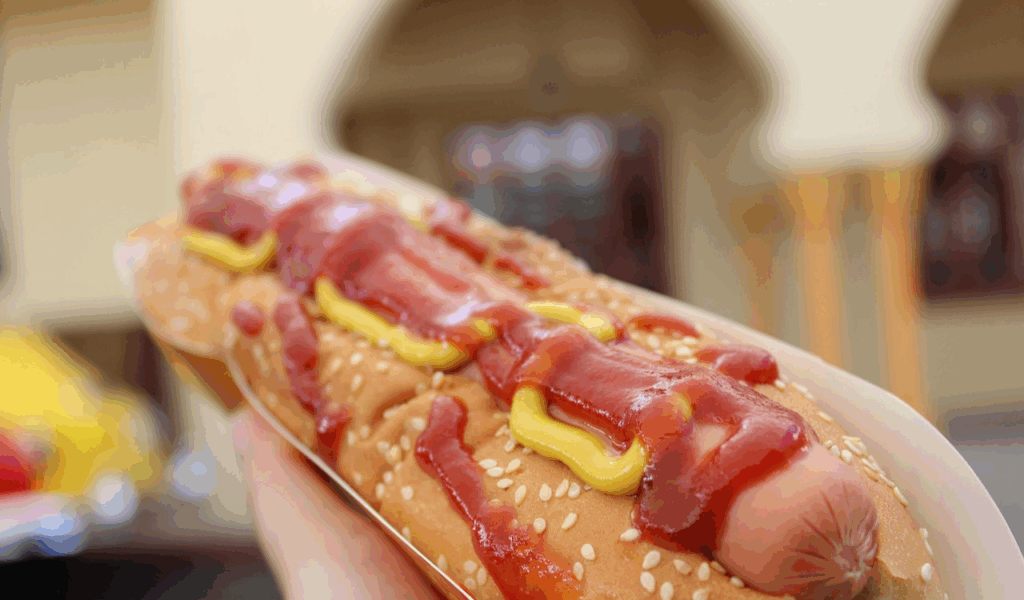
Rhode Island’s New York System wiener turns a simple snack into a very specific ritual. These are small veal and pork-based wieners, not standard all-beef franks, and they are cooked on a griddle then tucked into steamed buns. What defines the style is the topping order and the distinctive meat sauce. The wiener is dressed with a stripe of yellow mustard, a spoonful of finely textured ground meat sauce, chopped raw onions, and a sprinkle of celery salt. The sauce is not a chili in the Texas sense. It is a seasoned meat condiment with a finer grind and a warm spice profile that can include nutmeg or allspice. Staff at classic “New York System” counters often build multiple wieners along their bare forearm, dressing them in one quick sequence.
4. Chicago Style Hot Dog
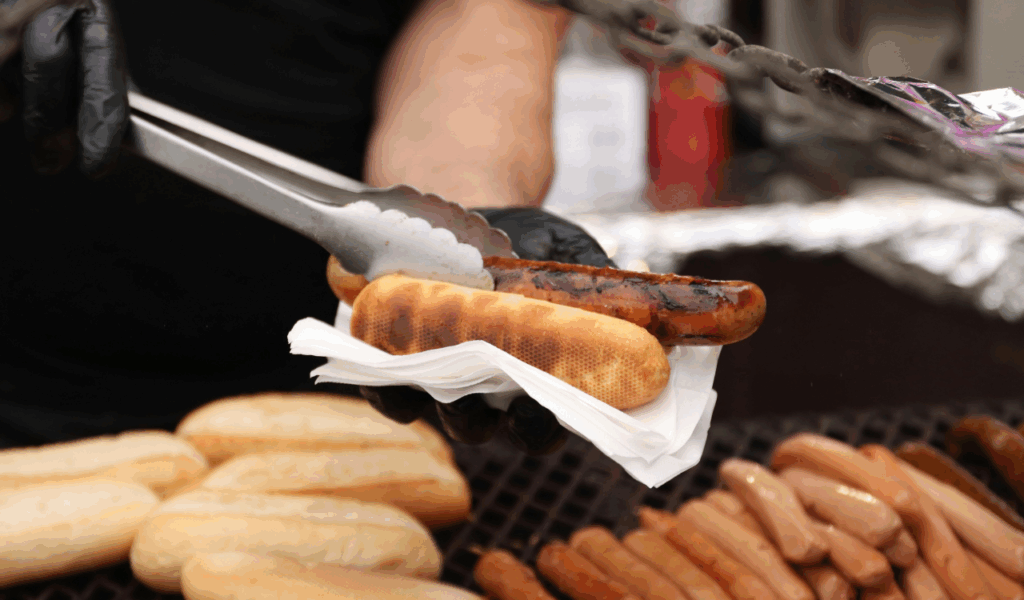
The Chicago-style hot dog is probably the clearest example of a hot dog becoming a full salad bar in a bun. At its core, it is an all-beef frank, often with a natural casing, nestled into a steamed poppy-seed bun. What makes it unmistakable is the full roster of toppings: yellow mustard, chopped white onions, bright neon green sweet relish, tomato wedges, a dill pickle spear laid along the side, pickled sport peppers, and a dusting of celery salt. Ketchup is traditionally left out entirely. The dog is usually steamed or simmered, although char-grilled versions are also common. The phrase “dragged through the garden” sums up the idea that this is as much about fresh, crunchy vegetables as it is about the sausage itself.
5. Detroit Style Coney Dog
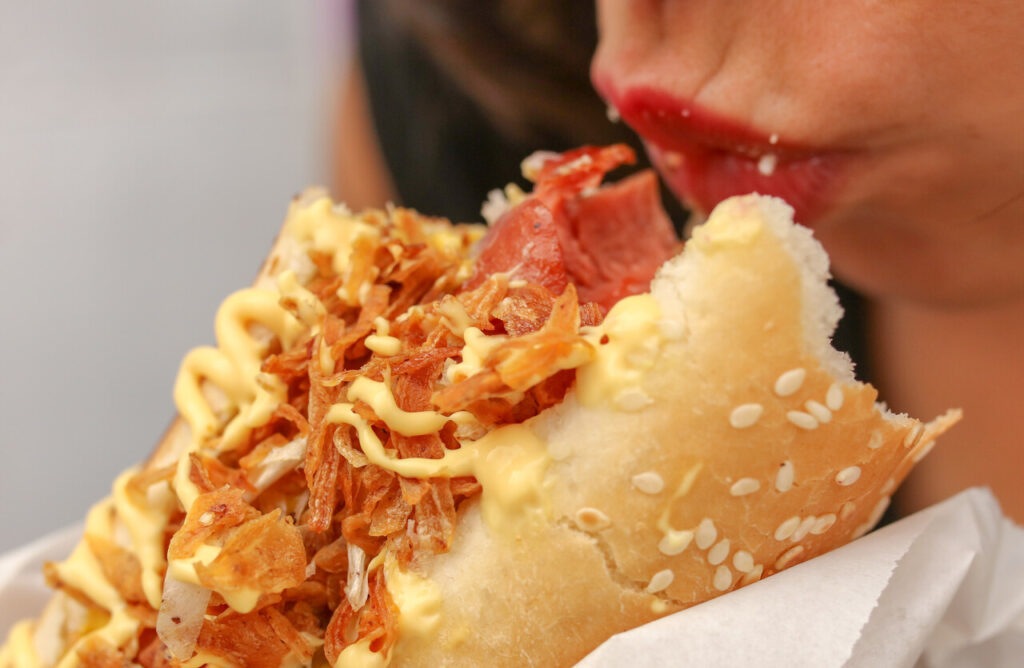
A Detroit-style coney dog shows how much topping can reshape a basic hot dog without turning it into a bowl of chili. The dog itself is usually a natural casing, frank, steamed, or grilled, placed in a soft white bun. On top goes a finely ground, bean-free meat sauce known as coney sauce, seasoned with spices but thinner and more pourable than stew. Yellow mustard and chopped onions finish the build. The balance here is important: the sauce should cling to the dog while still acting as a condiment, not a ladle of chili obscuring everything underneath.
6. Seattle Style Hot Dog
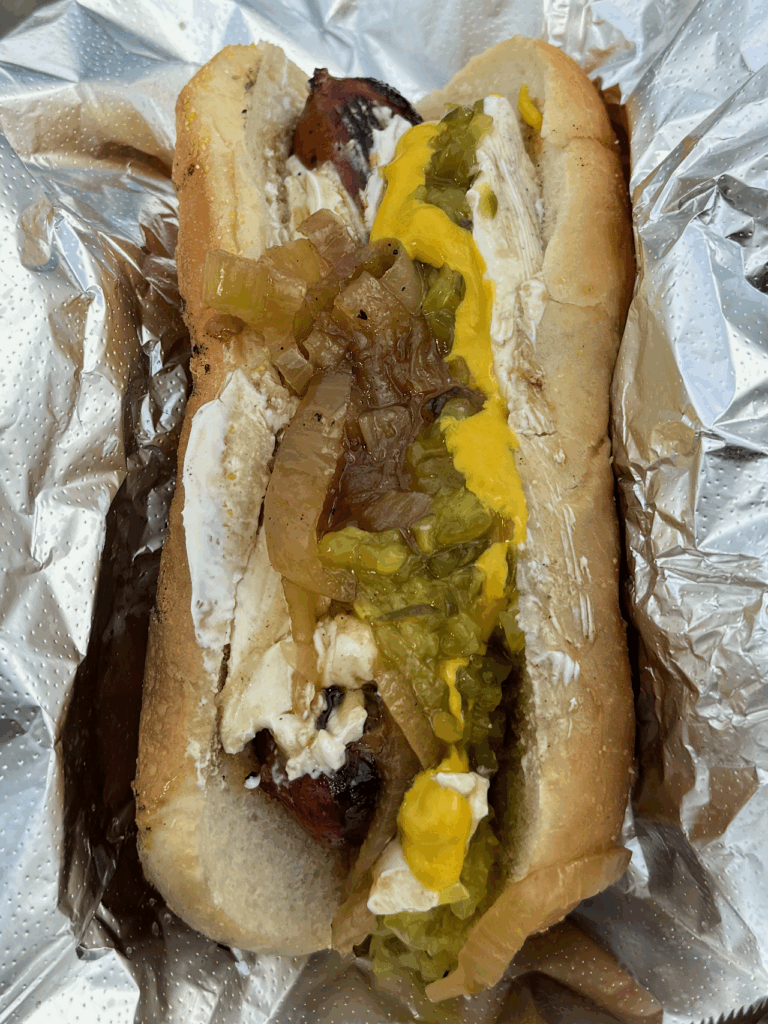
Seattle’s signature hot dog shows up most clearly outside music venues and stadiums at night, where food carts line the sidewalks. The key twist here is cream cheese. A Seattle-style dog starts with a grilled sausage, often on a split, toasted bun that was originally closer to a bagel or bialy roll. The inside of the bun gets a generous layer of softened cream cheese, then the hot dog, then a pile of sautéed onions. Vendors often offer extra toppings like jalapenos, sauerkraut, or mustard, but the cream cheese and grilled onions are the non-negotiable elements. That rich, tangy layer changes the texture and temperature balance of the dog, cooling each bite slightly while still letting the grilled sausage stand out.
7. Coney Island Hot Dog
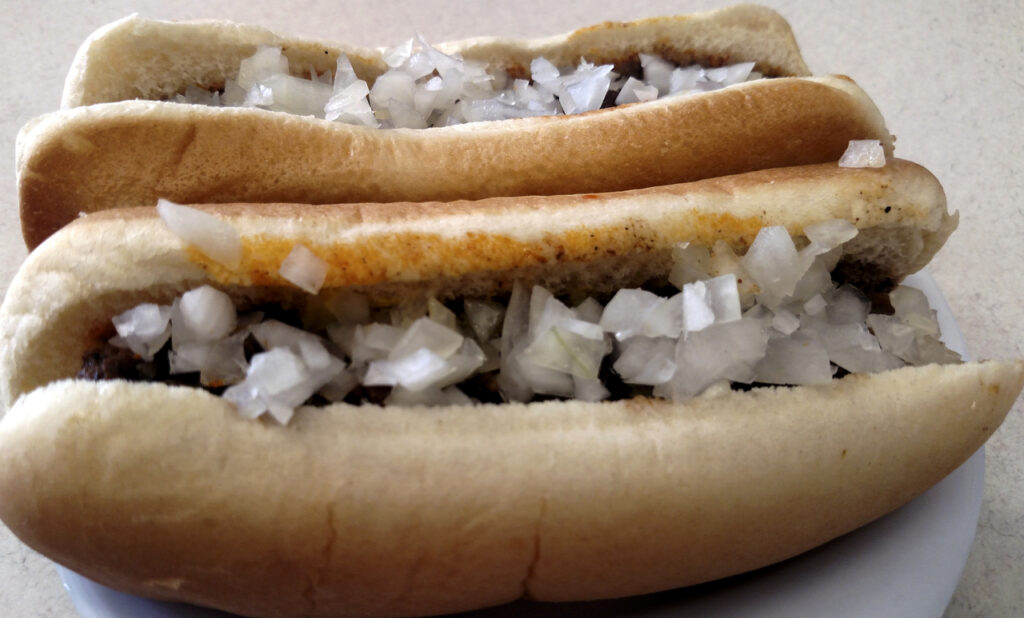
Despite the New York name, the Coney Island hot dog, as most people know it, is really a Midwestern chili dog tradition with roots in Greek and Macedonian immigrant-owned diners. The base is an all-beef frank, often grilled, set into a soft bun. It is topped with a finely textured, bean-free meat sauce that many places call coney sauce, plus yellow mustard and chopped onions. The sauce is distinct from Texas chili, usually less tomato-heavy and more focused on warm spices and a smooth, spoonable texture that coats rather than floods the dog. Over time, Detroit, Flint, and other cities developed their own coney variants, but the core idea remains a hot dog plus a spiced meat topping and simple condiments.
8. Jersey Ripper
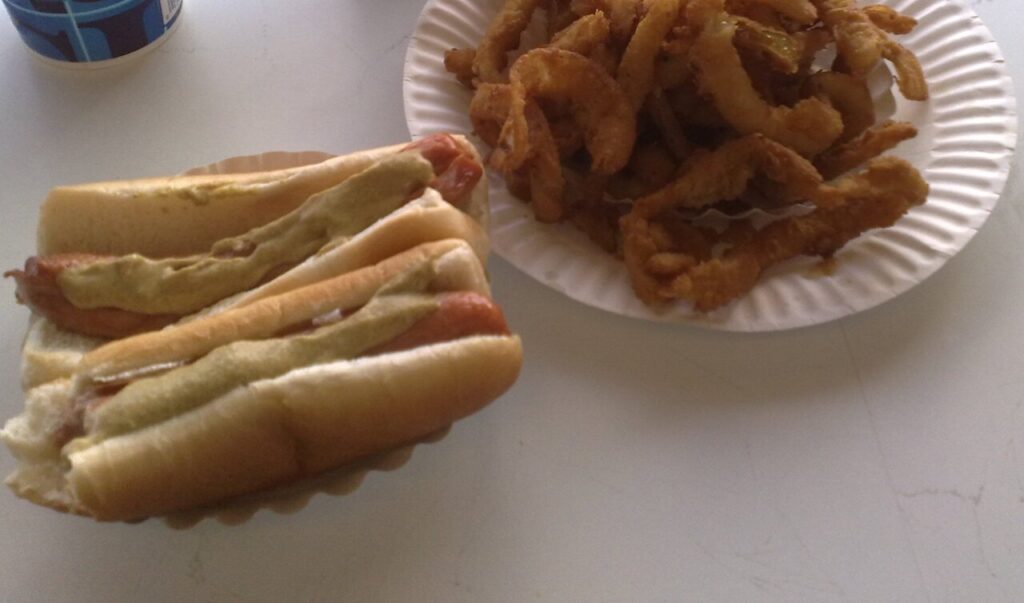
New Jersey’s ripper is built around one very specific cooking method. Instead of grilling or steaming, the hot dog, usually in a natural casing, is deep-fried in oil until the skin blisters and splits open. That ripping action is what gives the style its name. The split casing lets hot fat rush in, creating a rough, craggy exterior and a slightly drier, very flavorful interior. At classic spots like Rutt’s Hut, dogs are ordered by degree of doneness, from gently blistered to heavily browned. Toppings can be simple mustard and relish or more elaborate combinations that include a house-made relish or sauteed onions.
9. Southern Slaw Dog
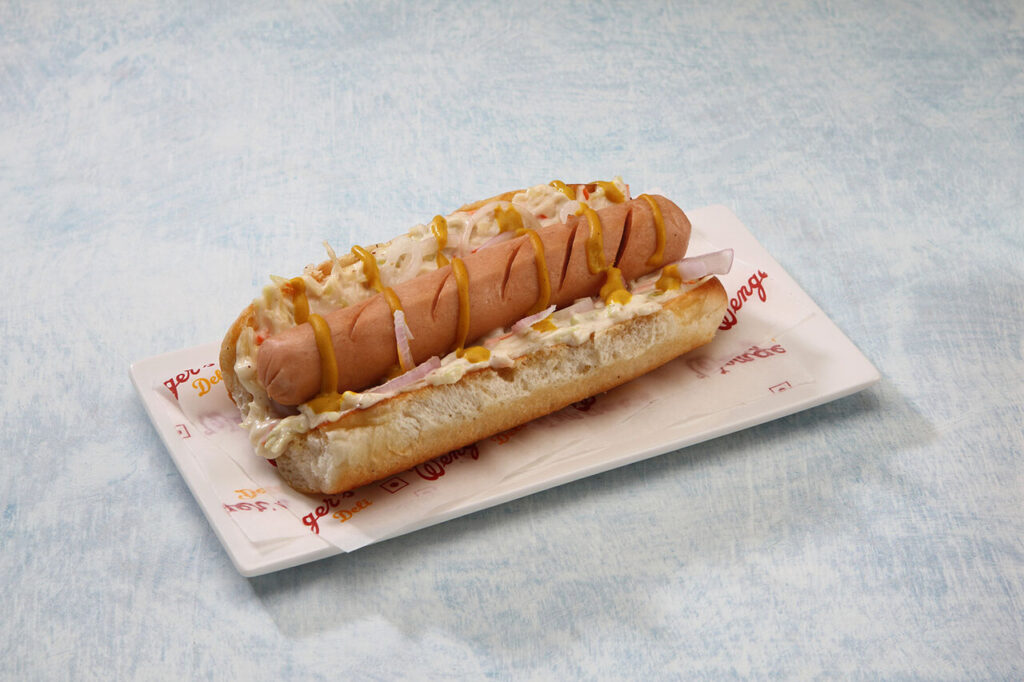
The Southern slaw dog, especially in the Carolinas, is all about contrast in texture and temperature. A typical version starts with a grilled or steamed hot dog in a soft bun, then layers on yellow mustard, a loose, beefy chili or meat sauce, and a generous scoop of coleslaw. The slaw can be creamy or vinegar-based based depending on the region, but it always brings crunch and acidity to cut through the richness of the meat and bun. Onions are often added too. The idea is not to stack exotic toppings, but to combine three very familiar ones in a way that feels complete in every bite: smoky meat, tangy slaw, and soft bread.